
What becomes of Sullivan?
When Joseph Sullivan returned to Hokitika to give evidence about the robbery of the Hokitika police camp and the murder of George Dobson, a mob called for him to be lynched. Chamberlain was sentenced to four years for perjury in the case of the stolen revolvers; one of the accused police 'insiders' was acquitted. James Wilson was acquitted of the murder of George Dobson, with the jury indicating that Sullivan was the most likely killer.
Legacy of the murders
'Even before the famous Maungatapu murders in 1866, swaggers were looked upon with distrust on the West Coast, and after that date hardly any one travelled in those parts without carrying a small revolver in his breast-pocket.'
Station Amusements in New Zealand, Lady Barker, William Hunt & Co., London, 1873
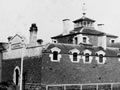
Sullivan was transferred to Dunedin Gaol in early 1868. When he was recognised in transit, his police escort had to defend him at gunpoint; the captain of the steamer transporting the party refused to carry them. A week later, creatively disguised as a policeman escorting a prisoner, he was again recognised during a stopover in Wellington. But he made it to Dunedin.
Despite Sullivan’s protestations, it was not until 1874 that the governor, Sir James Fergusson, pardoned him on condition that he never return to New Zealand. He was disguised and taken to Mt Eden prison in Auckland to await transportation overseas. His first attempt was thwarted when he was recognised and denied passage. He eventually left on 31 March aboard the Hindostan, bound for London.
By December 1874 Sullivan was back in Australia. Arrested at his wife's house under the terms of the Influx of Criminals Prevention Act, he received a three-year sentence. When he was released in 1876 arrangements were made to deport him to New Zealand, but the government refused to accept him. We know nothing of his fate thereafter.


