
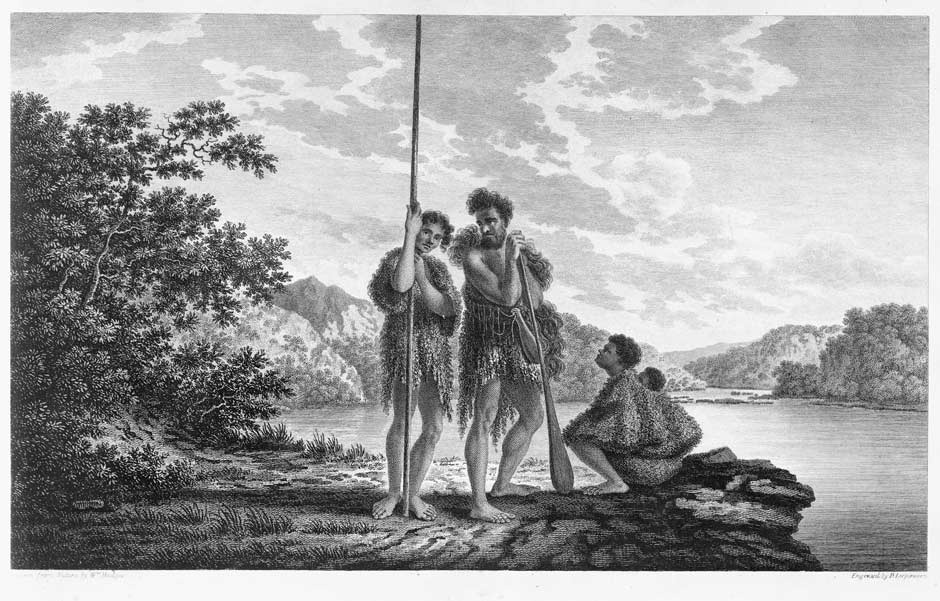
This engraving of a Māori family in Dusky Sound, Fiordland, is from a drawing made by William Hodges (1744–97) during James Cook’s second visit to New Zealand in 1773.
The image depicts Māori as ‘noble savages’, a term associated with the romantic philosophy popular in this period. Indigenous people were defined as being in some way ‘exotic’ and belonging to a culture/race that was uncorrupted. Living in harmony with nature, ‘noble savages’ were seen as both physically and morally superior to Europeans, who were tainted by the excesses of modern life.
The great majority of European visitors to New Zealand in the early contact period were not so generous in their views. They saw Māori society as vastly inferior to their own. Because Māori were in the majority, their custom and practices were tolerated. Challenging or disrupting Māori society was not good for business. Some Europeans who lived with Māori came to appreciate the intricacies of their way of life, but most did not.


Community contributions