
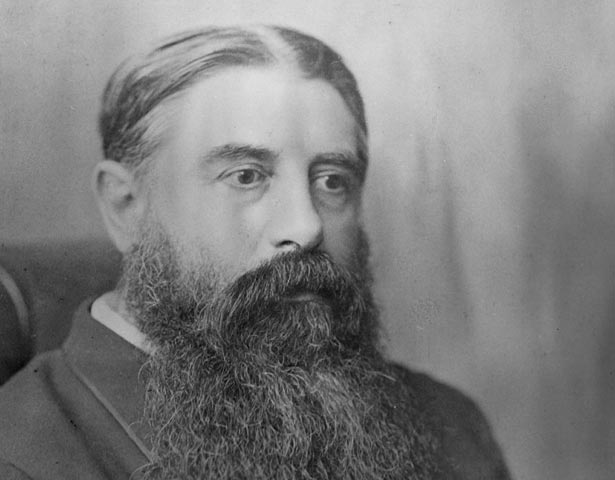
Although he spent just 18 years here, journalist, businessman and politician Julius (Sir Julius from 1874) Vogel dominated our politics.
The Dictionary of New Zealand Biography describes our first Jewish premier as ‘vastly ambitious’ and ‘clever, impulsive, generous, strong-willed to the point of being domineering.’ Some of his contemporaries were less polite.
A lifelong gambler and speculator, Vogel followed the gold rushes, learning journalism in Victoria in the 1850s. In 1861 he fetched up in Dunedin, where he edited our first daily newspaper, the Otago Daily Times. Print, politics and profits were his watchwords.
In Otago, Vogel entered politics. Dunedin knew him as a staunch provincialist, but he switched horses while colonial treasurer for most of the 1869–76 period, appalled by the cost of the New Zealand Wars and the lack of a master plan for developing the colony.
Vogel’s great plan was to borrow heavily to build infrastructure (railways, ports and telegraphs) and to lure migrants. It was controversial, and ended in a recession, but the money and migrants stimulated the economy and created a viable consumer market for producers. Historians still talk about the ‘Vogel era’.
The rapid and cheap acquisition of Māori land was a key part of this policy, and Vogel dramatically speeded up the Crown purchase of land. He and his supporters were certain that Māori and settlers would reconcile when the former, and their land, became fully integrated into the European economy.
Vogel, whose love of society, food and wine ruined his health, served as agent-general in London from 1876 until 1880, when he had to resign after spending too much time on his private interests. The whiff of scandal that hung around him was not always attributable to anti-Semitism.
He returned to New Zealand in 1884 and was the heavyweight – literally and metaphorically – in the two Stout–Vogel ministries.
Vogel returned to England in 1888. There he wrote the novel Anno Domini 2000: or Woman’s Destiny, in which women dominated government and poverty had vanished. It enjoyed a brief revival around the turn of the 21st century when women held the positions of sovereign, governor-general, prime minister and leader of the opposition.
By Gavin McLean
Further information:
How to cite this page
'Julius Vogel', URL: https://nzhistory.govt.nz/people/julius-vogel, (Ministry for Culture and Heritage), updated 30-Apr-2018


Community contributions