See historic events for any day of the year by entering the date below. Why not try your birthday?

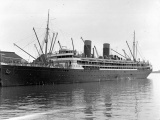
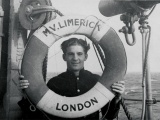
For decades, many people believed that a deadly new influenza virus came to New Zealand aboard the Royal Mail liner Niagara, which arrived in Auckland from Vancouver and San Francisco on 12 October 1918. This is no longer thought to have been the case.
Among the ship's passengers were Prime Minister William Massey and his deputy Joseph Ward, who were returning from a war conference. False rumours circulated that Massey had personally rebuffed quarantine measures; in fact, he insisted that he and Ward be treated the same as other passengers. Twenty-nine Niagara crew members and several passengers were hospitalised in Auckland, but doctors reported that their cases were no more severe than others already seen in the city. Indeed, six people had died of the flu in Auckland in the three days before the Niagara arrived. And the great upsurge in severe cases in the city occurred two weeks later, well outside the 48-hour incubation period. Although no one knows exactly how or when the flu reached New Zealand, it is misleading to blame the Niagara, which was only one of dozens of ships (many of them carrying returning soldiers and war invalids) to arrive from Europe and North America in October 1918.
Image: the Niagara and the 1918 pandemic

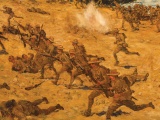
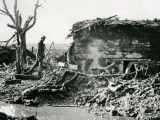
In terms of lives lost on a single day, this was the greatest disaster in New Zealand's history. The tragic events of 12 October 1917 would leave more than 2700 New Zealanders dead, wounded or missing. Ever since, Passchendaele has been a byword for the horror of the Great War.
Eight days earlier, on 4 October, 320 New Zealanders had been killed during the capture of Gravenstafel Spur, one of two spurs on the ridge above Passchendaele in Flanders, Belgium. Although this attack was successful, it had a tragic aftermath. The British High Command mistakenly concluded that the number of German casualties meant enemy resistance was faltering and resolved to make another push immediately. An attack on 9 October by British and Australian troops was to open the way for II Anzac Corps to capture Passchendaele on the 12th. The plan failed at the first hurdle. Without proper preparation and in the face of strong German resistance, the 9 October attack collapsed with heavy casualties.
The New Zealanders began their advance at 5.25 a.m. on 12 October. Almost immediately the effects of a largely ineffective artillery barrage became obvious. Exposed to raking German machine-gun fire from both the front and the flank, and unable to get through the uncut barbed wire, the New Zealanders were pinned down in shell craters. Orders for another push at 3 p.m. were postponed and then cancelled. The troops eventually fell back to positions close to their start line. For badly wounded soldiers lying in the mud, the aftermath of the battle was a private hell; many died before they could be rescued. The toll was horrendous: 45 officers and 800 men were either dead or lying mortally wounded between the lines.
On 18 October, II Anzac Corps was relieved by Canadian troops. In a series of well-prepared but costly attacks in atrocious conditions, they finally occupied the ruins of Passchendaele village on 6 November. The offensive had long since failed in its strategic purpose and the capture of Passchendaele no longer represented any significant gain.
Image: Tyne Cot Cemetery near Passchendaele (Passendale) – this contains the graves of more New Zealanders than any other cemetery beyond our shores.