

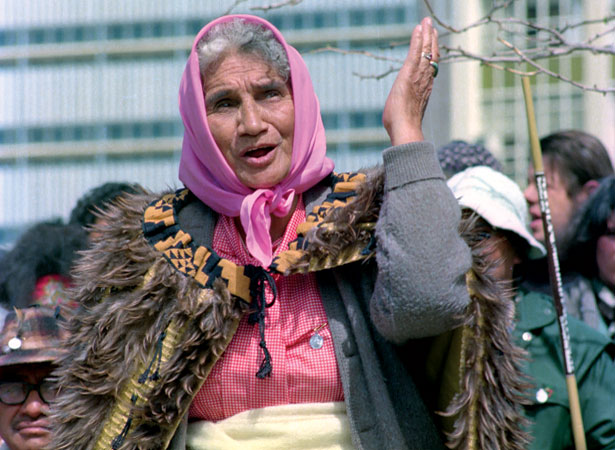
About 5000 marchers arrived at Parliament and presented a petition signed by 60,000 people to Prime Minister Bill Rowling. The primary aim of the hīkoi (march) was to protest against the continuing loss of Māori land.
Te Rōpū Matakite o Aotearoa (‘Those with Foresight’) was launched at a hui (meeting) convened by Te Rarawa leader Whina Cooper at Māngere Marae in early 1975. Its creation stemmed from concerns over the historic sale of Māori land and the desire to retain control of land still in Māori hands.
Fifty marchers left Te Hāpua in the far north on 14 September for the 1000-km walk to Wellington. Led by 79-year-old Cooper, the hīkoi quickly grew in strength. As it approached towns and cities, local people joined to offer moral and practical support. The marchers stopped overnight at different marae, on which Cooper led discussions about the purpose of the march.
Public interest grew and the hīkoi arrived in Wellington with the full attention of the national media. After a memorial of rights was presented to Rowling, about 60 protesters set up a Māori embassy in Parliament grounds.
Read more on NZHistory
Treaty events since 1950 – Treaty timelineThe Treaty debated – The Treaty in practiceWhina CooperTe Rōpū Matakite o Aotearoa march to Parliament, 1975 – The Treaty in practice1975 - key events – The 1970sThe dawn raids: causes, impacts and legacy – The dawn raids: causes, impacts and legacy
External links
How to cite this page
'Whina Cooper leads land march to Parliament', URL: https://nzhistory.govt.nz/whina-cooper-led-land-march-te-ropu-o-te-matakite-reaches-parliament, (Ministry for Culture and Heritage), updated 27-Oct-2021


