
Responding to New Zealand's worst rail disaster
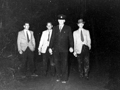
Cyril Ellis from Taihape had been forced to stop his car when he reached the road bridge, which was submerged. When he saw the light of the approaching locomotive he desperately ran towards it waving a torch in an attempt to warn the driver. Later investigations showed that the brakes had been applied, but not soon enough to save most of those in the first five carriages.
Ellis and William Inglis, the train’s guard, climbed in to warn the passengers in Car Z and move them to the carriage behind. Almost immediately, Car Z broke free and fell into the river. When it came to rest, Ellis, Inglis and one of the passengers, John Holman, managed to get all but one of the 22 passengers out through the broken windows and onto the side of the carriage. As the floodwaters receded, the survivors were able to form a human chain and make their way to the bank.
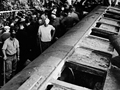
Arthur Bell and his wife had also stopped at the flooded road bridge and seen the express crash into the river. As his wife went to raise the alarm, Arthur helped rescue survivors from another carriage that had landed on the riverbank. Those who had managed to free themselves were swept further downstream before they were able to crawl ashore.
People nearby had heard an inexplicable roaring noise coming from the direction of forestry plantations, and this had prompted Leo Smidt, Waiōuru’s 22-year-old police constable, to investigate. He was one of the first on the scene and directed the rescue until more senior staff arrived from Taihape.
In 1953 there was no national rescue organisation. Members of the New Zealand Forest Service, Ministry of Works, police, navy personnel, groups of farmers and other local volunteers worked throughout the night. The Waiouru Military Camp provided much-needed manpower as well as transport and shelter for survivors and those involved in the rescue mission.
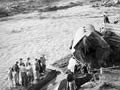
Though the river subsided markedly within 45 minutes of the accident, overnight rescue efforts were still extremely dangerous. The fast-flowing water was full of debris brought down in the lahar and wreckage from the train. Oil and silt covered passengers and rescuers alike. Daybreak revealed a scene of utter devastation. The river and the surrounding area resembled a muddy estuary at low tide. Twisted and splintered carriages lay everywhere.
The rescue operation soon became a body recovery operation. In the following days, bodies stripped and mangled by the flood were recovered as far away as the river mouth, 130 km downstream. In his broadcast on Christmas Day, Prime Minister Sidney Holland asked ‘Farmers and others with property on the banks of this river as far as the sea … to keep a close watch for bodies and to send reports to the nearest police station.’ About 60 bodies were recovered by locals from the Mangamāhū section of the river. Some of the 20 bodies that were never recovered may have been washed out to sea.
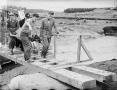
George Twentyman, a young constable, was in charge of the enormous volume of clerical work involved in recording bodies and property to ensure they were kept together. This experience was to be put to good use when he took command of the rescue operation during the Wahine tragedy in 1968.
The Queen awarded Cyril Ellis and John Holman the George Medal for their services at Tangiwai. William Inglis and Arthur Bell, who had together rescued 16 people, received the British Empire Medal.


