
Opposition to French nuclear testing intensifies
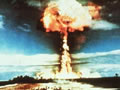
New Zealand’s ongoing protest over French nuclear testing in French Polynesia reached the International Court of Justice in 1973. France ignored the court’s ruling that they should cease testing. The Kirk administration responded by sending two navy frigates into the test area in June–July to serve as ‘a silent, accusing witness’. Cabinet minister Fraser Colman accompanied the protest. These actions achieved some limited success. In 1974 the new French president, Valéry Giscard d’Estaing, ordered that the tests move underground. Mururoa Atoll remained a focus of anti-nuclear protest throughout the decade.
First oil shock
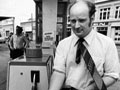
The decision by Arab oil producers to cut supply in the wake of the Yom Kippur war with Israel in 1973 saw oil prices soar from US$3 a barrel to close to US$20 virtually overnight. Like all industrialised economies, New Zealand relied heavily on crude oil and suffered severe consequences. Higher petrol prices meant higher freight costs, higher costs for goods, higher wage rates and inevitably higher retail prices. This first oil shock (another followed in 1978–9) contributed to New Zealand’s decline into recession by 1976. The government responded by burning gas from the recently discovered Māui gas field in Taranaki to generate electricity and extract the accompanying condensate for use as fuel.
Britain joins the European Economic Community
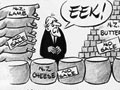
Britain had first applied for admission to the European Economic Community (EEC) in 1963. British membership of the EEC would in effect exclude New Zealand from the British market. The 1971 Luxembourg agreement brought New Zealand butter, cheese and lamb exports some time when Britain finally joined the EEC in 1973. By then New Zealand’s exports to the ‘Mother Country’ had fallen to less than 30% of all exports, and within two decades they would be below 10%.
As well as our major export market, Britain had long been New Zealand’s main supplier of imports. When Britain entered the EEC all bilateral agreements between New Zealand and Britain had to be terminated, and preferential treatment of British imports into New Zealand ended in 1977. From 43% of our total imports in 1960, imports from Britain had fallen to 14.5% by 1980.
Introduction of the Domestic Purposes Benefit
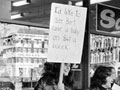
During the 1960s there had been an increase in the number of households without a male ‘breadwinner’ as divorce rates and the number of births outside of marriage increased. The 1972 Royal Commission on Social Security recommended the introduction of a Domestic Purposes Benefit which would enable sole parents to stay home to care for their children.
The numbers of those on the DPB – almost all of them women – rose during the 1970s. The DPB created a new class of New Zealander, the ‘solo mum’, who in tougher economic times came to symbolise what critics complained was wrong with the welfare state. While some thought solo mums were ‘ripping off the system’, others argued that the DPB was an important right for women. It gave them and their children some protection from failed relationships and potential harm. Advocates maintained that the amount paid was barely enough to provide basic necessities and so was no incentive for women to give up paid work voluntarily.
Other 1973 events
- New Zealand’s total population reached three million.
- Trans-Tasman travel arrangements allowed citizens of Australia and New Zealand to travel freely between the two countries without a passport.
- John Hanlon’s ‘Damn the dam’ was named single of the year award at the 1973 New Zealand music awards. Originally recorded as a jingle for a home insulation advertisement, it had become an unofficial environmentalist anthem. Lower Hutt teenager Shona Laing was the big winner at the music awards, scooping three of the main prizes.
- Fearing the ‘greatest eruption of violence this country has ever known’, the Kirk-led Labour government cancelled the proposed 1973 Springbok tour.
- New Zealand batsman Glenn Turner became just the seventh cricketer to score a thousand runs in first-class matches in England before the end of May.
- Twenty-three protesters were arrested after violent clashes with police outside American defence facilities at Harewood and Weedons, Christchurch.
- Comedian John Clarke introduced New Zealand to his alter-ego Fred Dagg – and a host of ‘Trevs’
- Colour TV arrived just in time for New Zealanders to enjoy the pomp and ceremony of Princess Anne’s wedding to Captain Mark Phillips in November.
- Selwyn Toogood’s popular long-running radio and stage show It's in the Bag made its TV debut. The popularity of both Toogood and the format saw the show screen continuously until 1990.
Can you remember 1973? Add your memories and comments in the form below.


Community contributions