
King of the track
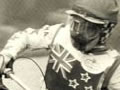
Ivan Mauger won a record sixth world speedway title in Katowice, Poland. The Christchurch-born Mauger was the dominant force in world speedway and had won three titles in a row between 1968 and 1970. He also won three world long-track titles between 1971 and 1976. Such was his status in the sport that readers of a leading speedway publication named him ‘Millennium Man of Speedway’ in 1999.
Spirit of Woodstock
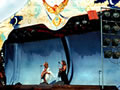
In late January 1979, towards the end of what has been described as a ‘dull, fragmented decade musically and culturally’, more than 60,000 young New Zealanders came together for the highly successful three-day Nambassa festival. Previous attempts to emulate the Woodstock experience had failed to attract the crowds needed to turn a profit. This festival held on Phil and Pat Hulse’s 160-ha farm in Golden Valley, just north of Waihī, set the benchmark for all future New Zealand rock festivals.
Second oil shock
After the Iranian revolution world oil prices soared from around US$13 a barrel to US$32. The government sought to reduce oil consumption in a number of ways, ranging from the ambitious and expensive ‘Think Big’ projects to the introduction of carless days. The term ‘Think Big’ was first used by cabinet minister Allan Highet in a speech to a National Party conference in 1977. The projects included a plant at Waitara to produce methanol for export. The most ambitious was the Motunui synfuel plant. A world first, this converted gas to methanol (methyl alcohol) and then to synthetic petrol. While technically successful it proved to be uneconomic – like many of the other projects – when world oil prices fell in the 1980s. The 1979 National Development Act gave the government the power to accelerate projects believed to be in the national interest. However, plans to construct an aluminium smelter at Aramoana on Otago Harbour were ultimately shelved because of resistance on environmental grounds.
Erebus disaster
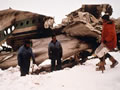
All 257 passengers and crew on Flight TE901 were killed when an Air New Zealand sightseeing flight over Antarctica crashed into the lower slopes of Mt Erebus near Scott Base. This remains the worst civil disaster in New Zealand’s history. Professionals and volunteers from Antarctica and New Zealand took part in difficult and often harrowing investigative, recovery and identification operations. Debate raged as to who or what was at fault for the accident. The chief inspector of air accidents attributed the disaster to pilot error. Justice Peter Mahon’s Royal Commission of Inquiry placed the blame on Air New Zealand and its systems.
Other 1979 events
- New Zealander Blair Peach was killed during a clash between police and protesters at an anti-fascism rally in Southall, London.
- Arthur Allan Thomas, twice convicted of the Crewe murders of 1970, was granted a full pardon and compensation of nearly $1 million after a Queen’s Counsel identified ‘serious flaws’ in the Crown’s case against him.
- The mutilated body of Marty Johnstone, the New Zealander regarded as head of the ‘Mr Asia’ drug syndicate, was found in a flooded disused quarry in Lancashire. His killing had been ordered by fellow Kiwi Terry Clark.
- Malcolm Douglas became the first MP since 1873 to be removed from Parliament after being sworn in and taking his seat when Winston Peters’ electoral petition was upheld.
- Politicians and staff finally moved into the Beehive, two years after the Queen had officially opened the new Executive Wing.
- Street Talk picked up Album of the Year at the Music Awards, with Th’ Dudes winning the Top Group award. Rob Guest and Sharon O’Neill won the solo awards.
- A landslide in the Dunedin suburb of Abbotsford left 69 houses uninhabitable but fortunately caused no injuries.
Can you remember 1979? Add your memories and comments in the form below.


Community contributions