See historic events for any day of the year by entering the date below. Why not try your birthday?

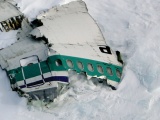
Flight TE901, an Air New Zealand sightseeing flight over Antarctica, crashed into the lower slopes of Mt Erebus, near Scott Base, killing all 257 passengers and crew on board.

New Zealand women went to the polls for the first time, just ten weeks after the Governor, Lord Glasgow, signed the Electoral Act 1893 into law, thereby making this country the first in the world to enfranchise all adult women.
Despite the short time frame for voter registration, 109,461 women – about 84% of the adult female population – enrolled to vote in the election. On polling day 90,290 of them cast their votes, a turnout of 82% (far higher than the 70% turnout among registered male voters). Although there were then no electoral rolls for the Maori seats, women also made up perhaps 4000 of the 11,269 Maori voters that year.
Despite warnings from opponents of women's suffrage that 'lady voters' might be harassed at polling booths, election day passed off in a relaxed, festive atmosphere. According to a Christchurch newspaper, the streets 'resembled a gay garden party', and 'the pretty dresses of the ladies and their smiling faces lighted up the polling booths most wonderfully'.
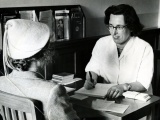
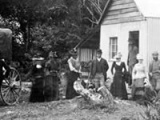
Image: women voting in 1893

At 4.46 a.m. New Zealand Daylight Time (4.46 p.m. local time) an Airbus A320-200, operated by German charter firm XL airways and owned by Air New Zealand, crashed into the Mediterranean Sea off the coast of Perpignan, France. All seven people on board were killed. It was 29 years to the day since Air New Zealand Flight TE901 crashed in Antarctica in 1979, killing all 257 passengers and crew on board.
The Airbus had been on a test flight following light maintenance and repainting into Air New Zealand livery at Perpignan ahead of its return to New Zealand from a two-year lease by XL Airways. The seven people killed in the accident were two Germans, a pilot and co-pilot from XL Airways, and five New Zealanders, one pilot and three engineers from Air New Zealand and one engineer from the Civil Aviation Authority. Following extensive efforts by the French authorities all of their bodies were recovered and identified.
French air accident investigators were assisted in their inquiries by their German, New Zealand and American counterparts, as well as the manufacturers of the aircraft and its engine, and the operators, XL Airways and Air New Zealand. Their interim report was released in February 2009. It reported that the crew had lost control of the aircraft after it stalled following a low-speed manoeuvre, which they were doing at a very low altitude. Some were quick to blame the crash on this manoeuvre but others urged people to wait for the final report which was due to be issued later in 2009.
In 2009 Air New Zealand marked the 30th anniversary of the Erebus disaster and the first anniversary of the A320 accident. The events marking the latter included a service in Perpignan where a memorial plaque of greenstone and local stone was unveiled.
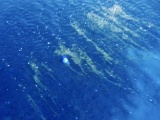
Image: Tail section of the Air New Zealand Airbus A320 airliner off France's southwest coast (Stuff)