
What happened that day?

Kiwi of the Week

  • charles-heaphy-biog.jpg

    Charles Heaphy

    The multi-faceted Charles Heaphy made quite an impact on colonial New Zealand as an artist, explorer, soldier and colonial administrator. He was the first colonial soldier to win the Victoria Cross

This WeeK's Quiz

Today in History

previous12 Novembernext

rss feed
Striker fatally wounded at Waihi

1912 Striker fatally wounded at Waihi

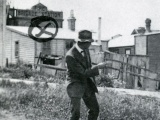
Striking worker Fred Evans was seriously injured in a clash with police and strikebreakers during the bitter six-month-long dispute at the goldmining town of Waihi. He died the following day.

An Australian-born stationary-engine driver, Evans belonged to the militant Waihi Trade Union of Workers. Led by Bill Parry, this was affiliated to the New Zealand Federation of Labour ('Red Feds') and was implacably opposed to the Waihi Goldmining Company. In May 1912 the union went on strike in protest at the formation of a company-inspired breakaway union for engine-drivers.

Escalating violence in Waihi culminated in the dramatic events of 'Black Tuesday', 12 November 1912. A crowd of strikebreakers and police stormed the miners' hall, at the time defended by Evans and just two or three other men. Both sides were armed. During a struggle at the door, a strikebreaker was shot in the knee, probably by Evans. As the unionists fled, a police constable was shot in the stomach, but managed to fell Evans with his baton. The latter went down under a barrage of boots and blows.

Left for an hour and a half in police cells before being taken to hospital, Evans never regained consciousness and died on 13 November. As the strike collapsed, strikers and their families were hunted through the streets by armed mobs. The violence was as vicious as any seen in a civil conflict in New Zealand, and hundreds of people fled Waihi over the following days.

Image: Memoriam ode to Fred Evans