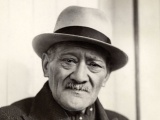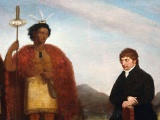

Te Ati Awa leader Wiremu Kingi Te Rangitake's refusal to give up his land at Waitara led to the outbreak of the Taranaki War. In later life joined the pacifist community at Parihaka
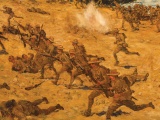
The Matawhero 'Massacre' saw Te Kooti and his followers kill approximately 60 people – roughly equal numbers of Maori and Pakeha. The attack was utu for Te Kooti's treatment after his capture at Waerenga-a-hika, three years earlier.
Just before midnight on 9 November 1868, around a hundred men, 60 of them on horseback, forded the WaipaoaRiver, near Patutahi pa on the PovertyBay flats. They moved quietly towards the nearby Pakeha settlement of Matawhero. By dawn they had killed about 60 people in Matawhero and the adjacent kainga (village) and torched their homes. The victims ranged from babies to the elderly. Some were shot, but most were despatched with bayonets, tomahawks or patu to avoid alerting their neighbours. Those who escaped the slaughter ran across the fields or along the beach to Turanganui (Gisborne), 8km away, crossed the river and sought safety in a redoubt. Half a dozen families fled south towards Mahia. Hundreds of local Maori were taken prisoner or joined the war party with varying degrees of enthusiasm.
The violence was savage, but not random. The leader of the war party, Te Kooti Rikirangi of Rongowhakaata, was exacting utu for the indignities heaped upon him since he had been accused of aiding Pai Marire adherents during the siege of Waerenga-a-hika, three years earlier. Exiled to the Chatham Islands, he developed the religious movement which was to become known as Ringatu. In July 1868 he led a revolt and brought 300 men, women and children back to PovertyBay in a captured schooner. His request for safe passage to the Waikato was rejected by the local magistrate, Major Reginald Biggs – the man who had sent Te Kooti to the Chathams. Biggs and his family were among those killed at Matawhero.