What happened that day?

Kiwi of the Week

  • wiremu-te-rangitake-biography.jpg

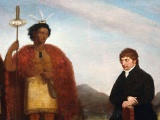
    Wiremu Kingi Te Rangitake

    Te Ati Awa leader Wiremu Kingi Te Rangitake's refusal to give up his land at Waitara led to the outbreak of the Taranaki War. In later life joined the pacifist community at Parihaka

This WeeK's Quiz

Today in History

previous16 Novembernext

rss feed
NZ officially becomes British colony

1840 NZ officially becomes British colony

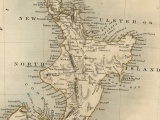
New Zealand officially became a separate colony of Britain, severing its link to New South Wales. The North, South and Stewart islands were to be known as ‘New Ulster’, ‘New Munster’, and ‘New Leinster’.

William Hobson had been appointed Britain's consul to New Zealand in 1839. He was instructed to obtain sovereignty over all or part of New Zealand with the consent of a sufficient number of chiefs. New Zealand would come under the authority of George Gipps, the governor of New South Wales. Hobson would become Gipps's lieutenant-governor.

On 21 May William Hobson proclaimed British sovereignty over all of New Zealand, the North Island on the basis of cession through the Treaty of Waitangi and the southern islands by ‘right of discovery'. Signatures to the Treaty were still being sought. Hobson may have wanted to declare the Crown's authority over the whole country because he had learned that the New Zealand Company had plans to set up its own administration around Cook Strait.

Shortly before Hobson left Sydney in January 1840 Gipps had issued a proclamation extending the boundaries of New South Wales to include such territory in New Zealand as might be acquired in sovereignty. The Legislative Council of New South Wales passed an Act extending to New Zealand the laws of New South Wales on 16 June 1840 and established customs duties and courts of justice here.

The relationship with New South Wales was intended as a convenience to cover the period during which British sovereignty was being asserted over New Zealand. Even before Hobson's dispatch reporting his proclamations had reached London, the decision had been made by his political masters to make New Zealand into a separate colony. The ‘Charter for erecting the Colony of New Zealand', effective form 16 November 1840, also constituted a nominated Legislative Council. The initial provincial divisions were at first of geographical significance only. They were not used as a basis for the government of the colony, then centralised in Auckland.

In 1846 a further Royal Charter divided the colony into two provinces and provided each with its own political institutions in addition to the central government at Auckland. The two provinces were called New Ulster and New Munster. New Leinster was merged with the South Island and the southern portion of the North Island as far north as the mouth of the Patea River in a reformed New Munster.

Each province was to have a Governor and a Legislative and Executive Council, with the Governor-in-Chief and his Legislative and Executive Council providing a central authority. In 1851 the Provincial Legislative Councils were permitted to be partially elective. All of this changed with the passage in Britain of the New Zealand Constitution Act of 1852.

Image: old map of NSW and NZ (Garwood & Voigt)