
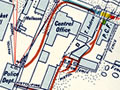
The worst incident in New Zealand’s relationship with Samoa occurred on Saturday 28 December 1929. It was precipitated by a fracas that erupted during a Mau parade along Apia’s waterfront to welcome home two members who had been exiled in New Zealand. The incident culminated in police opening fire on the crowd, leaving at least eight dead.
The fracas was caused by an attempt by the police to arrest the Mau’s secretary, who, provocatively, was marching in the parade. The Mau had earlier been warned that such action would be taken if any wanted men marched, and the administration feared for its authority if it failed to carry through on its threat. The marchers vigorously opposed the arrest attempt, and additional police arrived. As the situation deteriorated, some of the police fired their revolvers at the crowd, and then began retreating towards the police station in a side street, pursued by Samoans. During this movement Constable Abraham was caught and clubbed to death.
As the mob approached the station, a police sergeant fired a Lewis machine gun from the balcony in an effort to deter them. An experienced machine gunner, he directed the fire over the heads of the crowd. But three other policemen, panicking at the thought that the rioters might get under the balcony and burn the building down with them in it, fired at the crowd with their rifles. Tragically, this fire mortally wounded the prominent Samoan leader Tupua Tamasese Lealofi III. It also killed Migao, Leota Anese, Tapu, Ainoa, Faumuina of Savai’i, Vele and Tu’ia.
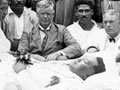
To the New Zealanders, this traumatic event had been caused by the Samoans’ resistance to the arresting party. The coroner, New Zealander John Luxford, concluded that the use of firearms had, in the circumstances, been justified. Naturally, Samoans took a very different view. To them the police had made an outrageous attack on an innocent crowd. The Mau made much of the machine-gun fire, claiming it had been directed at the crowd – and were angered when the coroner ruled this out (a verdict that was seemingly borne out by the limited number of casualties). The killing of Tamasese, who was apparently trying to restrain the crowd at the moment he was shot, left a deep sense of grievance among many Samoans. This was exacerbated by the administration’s actions in the following weeks.
The administration's response
Convinced that the Mau had lost heart, Administrator Stephen Allen adopted aggressive measures to ensure its complete collapse. On 13 January 1930, after the Mau refused to give up its headquarters and surrender wanted men, he declared the organisation seditious and the wearing of the Mau uniform illegal.
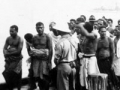
As many as 1500 Mau men took to the bush. They were pursued by an armed force of 150 marines and seamen from HMS Dunedin, recently arrived from New Zealand, and 50 military police. A seaplane supported military excursions into the bush to hunt down the fugitives.
At the present moment he [the Samoan] is in the position of a sulky and insubordinate child who has deliberately disobeyed his father, as the administrator is generally termed, and no peaceful persuasion will induce him to submit. There is no alternative, therefore, but to treat him roughly … force is the only thing which will appeal to the Samoan.
Commodore Blake, commander of the marines, in Lagaga: a short history of Western Samoa, pp. 137–8
Samoa’s inhabitants supported the Mau by supplying them with food and shelter, and providing reports on New Zealand operations. Marines attempted to prevent such activities by raiding villages, often at night and with fixed bayonets.
The Mau eluded the marines, but by mid-February both sides were showing signs of fatigue. In March, with the assistance of local Europeans and missionaries, Mau leaders met New Zealand’s Minister of Defence and agreed to disperse.
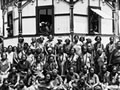
Brigadier-General Herbert Hart (1931–35) replaced Allen as Administrator in April 1931 and an uneasy stalemate ensued. Men were arrested for showing support for the Mau, so women rallied supporters and staged demonstrations. A surge in support when Olaf Nelson returned from exile in 1933 was quickly suppressed with his re-arrest and deportation the following year. The Mau appeared finished.


