What happened that day?

Kiwi of the Week

  • freyberg.biog.jpg

    Bernard Freyberg

    A First World War hero and commander of the 2nd New Zealand Expeditionary Force, Bernard Freyberg was British-born but New Zealand-raised. He proved to be a charismatic and popular military leader who would later serve a term as Governor-General

This WeeK's Quiz

Today in History

previous4 Septembernext

rss feed
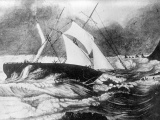
The wreck of the Delaware

1863 The wreck of the Delaware

Soon after leaving Nelson for Napier, the newly built brig Delaware struck bad weather. It was wrecked on rocks in a bay between Graham's Point and Pepin Island that is now known as Delaware Bay. Accounts of the incident often focus on the heroism of Huria Matenga, the only woman in a party of five local Maori who assisted the crew to shore. 

The Delaware departed from Nelson on the morning of Thursday 3 September in a light easterly wind, but was struck by gale-force winds and heavy rain overnight. By morning the vessel had lost its jib and found itself in the lee of Pepin Island. Shortly after Captain Robert Baldwin decided to let the anchor go, the windlass broke. The second anchor was then let go, but the vessel continued drifting. To save the lives of his crew the captain attempted to run the Delaware ashore, only to strike rocks a couple of hundred metres from safety.

At this point the first mate, Henry Squirrel, attempted to swim ashore with a lead line which could be used to haul in a stronger cable that the crew could use to get to shore. Unfortunately, on dropping from the rigging into the sea Squirrel struck some rocks. The crew managed to haul him back onboard but he was barely conscious and they concluded he was either dead or dying.

By this time a party of local Maori had seen the ship's difficulties and hurried to the shore. One or more swam out to some rocks closer to the wreck and caught the lead line from the crew. They then hauled the stronger cable to shore, anchoring it to a large rock. Because of the poor conditions Huria Matenga, her husband Hemi, and another member of the party, Ropata, went into the water repeatedly to assist the crew who were crawling along the cable to shore. Huria's brother, Eraia, tried to keep the cable away from the rocks, while another member of the party, Kerei, lit a fire and took care of the men as they arrived on shore.

All of the crew but Squirrel, the first mate who had put his life at risk, made it to safety. The crew and captain believed he was dead and had left him behind when they abandoned the ship. But about two hours after the captain, who was the last to leave, arrived safely on shore, Squirrel appeared on the deck of the ship and called for help. By this time the strong cable had been carried away, so the crew suggested that he lash himself to the rigging until the tide fell, but he was washed overboard. The inquest found that Squirrel's death was a case of accidental drowning, with the crew and the only passenger, Henry Skeet, supporting the captain's judgement that Squirrel was dead. One crew member recalled:

We shouted to the Captain that the hawser was parting, and still he waited to save the mate. He said, when he landed, that he lifted the mate's eyelids, and fancied that he was dead. From the state in which I saw the deceased, after he had been in the water, I think it would have been impossible to get him ashore.

At the inquest crew members also pointed out that they would all be dead if not for the efforts of Huria and the men. In recognition of their bravery, and to encourage others to undertake such acts, the party were presented with watches at a special ceremony on 4 November 1863. The address read to Huria at the ceremony noted that her name and deed would 'find place in local history'. This is undoubtedly true, but also somewhat ironic, considering that the name reported was not Huria but Julia, the English transliteration of her Maori name.

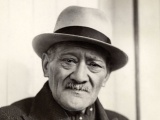
Image: Huria Matenga (DNZB