What happened that day?

Kiwi of the Week

  • freyberg.biog.jpg

    Bernard Freyberg

    A First World War hero and commander of the 2nd New Zealand Expeditionary Force, Bernard Freyberg was British-born but New Zealand-raised. He proved to be a charismatic and popular military leader who would later serve a term as Governor-General

This WeeK's Quiz

Today in History

previous15 Septembernext

rss feed
Lyttelton–Wellington ferry service ends

1976 Lyttelton–Wellington ferry service ends

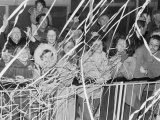
On 15 September 1976 the Rangatira arrived in Wellington from Lyttelton for the last time, bringing to an end more than 80 years of regular passenger ferry services between the two ports. The TEV Rangatira, a 9387-ton roll-on roll-off (RO-RO) vessel, had only entered service in 1972, as a replacement for the ill-fated Wahine, which had sunk with heavy loss of life in Wellington Harbour on 10 April 1968.

But the Rangatira came too late. By the mid-1970s most New Zealanders preferred to travel by aeroplane or, if they had cars, aboard the more convenient Picton­–Wellington road/rail ferries. The Union Steam Ship Company withdrew from the Lyttelton–Wellington route in 1974, and although the Ministry of Transport kept the Rangatira running for another two years, the end of the service was only a matter of time.

The Rangatira later served as a British troopship in the Falklands War. After several renamings, and much time laid up, the ship was scrapped in Turkey in 2005.

Image: The Rangatira

Steel production begins at Glenbrook

1968 Steel production begins at Glenbrook

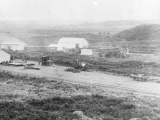
New Zealand Steel's mill at Glenbrook, south of Auckland, began producing a range of iron and steel products for both the domestic and export markets. Ironsand (from the nearby Waikato North Head mine) and coal is today used to produce about 650,000 tonnes of steel a year.

The 'black sands' of the west coast of New Zealand's North Island had been noted by James Cook in 1769. These ironsand (titanomagnetite) deposits have long been recognised as a rich reserve of metal ore. The ironsand is the product of rocks that originated from volcanic activity in the Taranaki area 2.5 million years ago. These rocks have been broken down over time and the resultant heavy, dark sands were carried by ocean currents and deposited on beaches along the west coast. In some places the ironsand deposits have formed dunes up to 90 metres high.

Early European settlers were fascinated by the sands' magnetic qualities. Early attempts to smelt iron from the ironsand met with little success. In the 1950s, with local and international demand for steel growing, renewed efforts were made to utilise this valuable resource for a home-grown steel industry. New technologies made it possible to use the ironsand in steelmaking. In 1959 the government established the New Zealand Steel Investigating Company. Its brief was to determine the technical and economic feasibility of manufacturing steel from local raw materials.

New Zealand Steel Limited was incorporated in 1965, with the long-term vision of establishing a steel industry utilising the abundant local raw materials. Construction of a mill at Glenbrook began in 1966 and commercial operations got under way in 1968.

The mill has been involved in pioneering innovative new techniques in the production of iron and steel. It has also endured a number of changes as a result of passing from public to private ownership. The constant through all of these changes has been the rich 'black sands' of the North Island, which continue to fuel steelmaking at Glenbrook.

Image: Ironmaking (detail) (NZ Steel