See historic events for any day of the year by entering the date below. Why not try your birthday?

The New Zealand Railways Magazine was published each month until June 1940. Based on British and American railway company magazines, it was originally intended as a shop organ for the Railways Department’s 18,000 staff and major customers.
Alongside railway news and technical articles from New Zealand and overseas, from the outset the magazine promoted domestic tourism through numerous travel stories, photo spreads, advertisements and accommodation listings. It soon expanded to include New Zealand verse, short fiction, humour, sports news, historical yarns, biographical sketches and book reviews.
The historian James Cowan was the magazine’s most prolific contributor, writing more than 120 historical and travel features, including 48 sketches of ‘Famous New Zealanders’. From 1935 to 1936 the writer Robin Hyde produced a lively travel series, ‘On the Road to Anywhere: Adventures of a Train Tramp’. Other contributors included Pat Lawlor (who wrote a regular 'Among the Books' column under the pseudonym 'Shibli Bagarag'), Margaret MacPherson, Alan Mulgan and Denis Glover.
In 1927 the magazine introduced a regular column ‘Of Feminine Interest’ (later entitled ‘Our Women’s Section’) featuring recipes, fashion tips, society gossip and notes on children’s health. As well as catering for the small number of female staff (85 at that time), New Zealand Railways hoped that the wives and daughters of the 12,000 married railwaymen would ‘appreciate the regular appearance of a page devoted to feminine and household matters’.
In 1933, apparently at the urging of Lawlor, the Railways Magazine further widened its brief to become a general-interest monthly for all New Zealanders. In the mid-1930s its circulation peaked at 26,000. The Railways Magazine survived the Depression but closed suddenly in June 1940 – a victim of wartime economies, paper shortages and the imminent retirement of G.G. Stewart, who had been its editor since 1926. Over its 14-year history, it had grown from a house journal into a hugely popular general-interest monthly. During the inter-war years no other monthly magazine matched its commitment to promoting a popular literary culture in New Zealand.

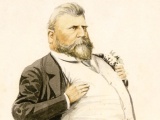
Richard Seddon became the Liberal Party's second premier, following John Ballance's death in office at the end of April. Immortalised as 'King Dick’, Seddon was to dominate the New Zealand political landscape for the next 13 years. He remains this country's longest-serving prime minister.
During the 1870s he became active in local politics. In 1879 he was elected to Parliament for Hokitika, and he later represented the Westland seat. In the House Seddon became notorious for his wordiness, and was ridiculed as boorish. Some of his critics accused him of being only 'partially civilised'. But his identification with the common man became a major asset. Personal attacks rebounded against his critics. He was a very astute politician who ultimately turned his apparent lack of sophistication to his advantage.
When the Liberals took office in 1891 Seddon was appointed to Cabinet. Among the many portfolios he held, he was Native Minister from 1893 to 1899. As a result of pressure from the Kotahitanga movement, in 1900 Seddon ended a period of extensive purchases of Maori land. The introduction of Maori Councils and Maori Land Boards also gave Maori some control over land loss, and community health and welfare. However, settlers forced a reversal of Seddon's Maori land and social policies in 1905. As a result, Maori land alienation increased rapidly.
The Liberal government was responsible for the passage of a number of laws designed to improve life for ‘ordinary New Zealanders’. The industrial arbitration system, restrictions on working hours for women and youth, and old-age pensions led some observers to describe New Zealand as a ‘social laboratory’ and 'working man's paradise', cementing the place of Seddon and the Liberals in New Zealand history.
Image: Richard Seddon asleep during committee