What happened that day?

Kiwi of the Week

  • wiremu-te-rangitake-biography.jpg

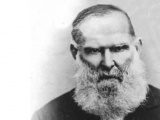
    Wiremu Kingi Te Rangitake

    Te Ati Awa leader Wiremu Kingi Te Rangitake's refusal to give up his land at Waitara led to the outbreak of the Taranaki War. In later life joined the pacifist community at Parihaka

This WeeK's Quiz

Today in History

previous22 Januarynext

rss feed
First European settlers arrive in Wellington

1840 First European settlers arrive in Wellington

The New Zealand Company's first settler ship, the Aurora, arrived at Petone, marking the official commencement of the settlement that would eventually become Wellington. The new settlement was named in honour of Arthur Wellesley, the first Duke of Wellington.

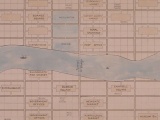
The New Zealand Company and its model of systematic colonisation was the brainchild of Edward Gibbon Wakefield. Central to his plans for this new settlement town was a ‘package’ of land which consisted of a town acre and an accompanying 100 country acres. There were 1100 one-acre town sections in the plan for Port Nicholson.

The plans for the Company settlement encountered problems from the beginning. The survey party led by Captain William Mein Smith had been sent to New Zealand before the Company had confirmed any land purchases. He arrived only weeks before the first settlers leaving no time to complete the survey.

The original site for the town at Pito-one (Petone) proved unsuitable. In early March floodwaters from the swollen Hutt River swept through the makeshift community. The decision was made to relocate across the harbour to Thorndon and Te Aro. Here further problems were encountered over what land had actually been purchased.

The original plans for the Company settlement had been prepared in England by Samuel Cobham. It was an incredibly orderly design with its grid pattern containing familiar names to remind settlers of England – Covent Garden, Soames Square and Billingsgate Fish Market. None of these made it to the final settlement which was laid out by the Company's chief surveyor .

Wellington would look nothing like the town mapped out by Cobham. As was often the case with the New Zealand Company, there was a substantial difference between theory and reality. One settler recalled how upon entering Wellington harbour, ‘disappointment was visible on the countenance of everyone’. Cobham's design had been developed primarily to encourage investors to get on board. Neither he nor any of the Company's principal agents had ever been to New Zealand. The geography that Mein Smith and the Company settlers had to contend with was very different to that imagined in Britain when the original plans were prepared.

By the end of the year 1200 settlers had arrived in Wellington. Wakefield had hoped to make the settlement the capital of New Zealand. He was to be disappointed when Governor William Hobson chose Auckland instead (although Wellington did become the capital later, when Parliament was moved to the city in 1865). The Crown also began investigating the New Zealand Company’s land purchases, which contributed to Wellington's slow growth in the 1840s. By 1850 this planned and ‘model settlement’ had a population of 5479. By comparison, the virtually unplanned settlement of Auckland had a settler population of 8301.

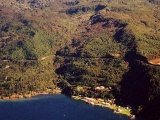
Image: detail from 1920s 'Windy Wellington' postcard (Redmer Yska collection)