See historic events for any day of the year by entering the date below. Why not try your birthday?

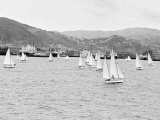
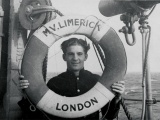
Twenty yachts left Wellington bound for Lyttelton in an ocean yacht race to celebrate Canterbury's centenary. An event run the opposite way had been held in 1940 to celebrate the capital's centenary. It was expected that the faster yachts would complete the journey in one and a half days, the slower over five days. But a severe southerly storm on 24 January saw most vessels withdraw from the race or be disqualified for using their engines. Only one, Tawhiri, officially finished the race, arriving in Lyttelton on 26 January. Two other yachts, Husky and Argo, were lost along with their 10 crew members. Read more

This magnitude 8.2 earthquake was to have a profound impact on the development of Wellington city. Land raised from the harbour provided much of the flat land that (combined with additional reclamations) has formed modern Wellington's CBD.
Wellington is susceptible to earthquakes because it rests on the point where two tectonic plates meet. These plate movements have resulted in three major fault-lines running either through or very close to Wellington City: the Ohariu Fault, the Wairarapa Fault and the Wellington Fault.
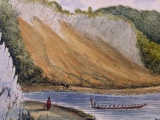
The earthquake was caused by movement along a fault in Palliser Bay. It lifted the southern end of the Rimutaka Range by a staggering six metres. A tsunami with waves up to 10 metres high was generated in Cook Strait, sending water surging back and forth within the harbour and flooding Lambton Quay.
The earthquake struck as Wellington was coming to the end of two days of celebrations to mark the 15th anniversary of its founding. The shaking began just after 9 p.m. and lasted for 50 seconds. Panicked residents fled outside where they remained for the night. Aftershocks rocked the area constantly and continued for months afterwards. During the following day people as far away as New Plymouth reported feeling continuous vibrations when sitting or leaning against walls.
Wellingtonians had experienced a significant earthquake in 1848, which had 'more than half destroyed' the settlement, and according to some accounts had seen many colonists turn ‘their backs permanently on Wellington'. Following this quake many buildings had been re-erected in wood. While the local council chambers and adjoining government offices, both two-storey wooden buildings, collapsed, most single-storey wooden houses survived. Many were damaged by falling brick chimneys, or shifted on their foundations, but few collapsed.
The quake also helped improve communications in the region. The newly exposed strip of shoreline between Wellington and the Hutt Valley offered a safe road and railway route. Previously parts of the coastal road had been impassable at high tide. The uplift of land drained the swampy lower reaches of the Hutt Valley and gave Wellington its famous Basin Reserve cricket ground.
Despite its strength, the quake is thought to have killed only a handful of people – one in Wellington, two in Manawatu and up to six in Wairarapa.