What happened that day?

Kiwi of the Week

  • john-reid-bio.jpg

    John Reid

    After debuting for the New Zealand cricket team against England in 1949 John Reid went on to play another 57 tests for his country, 34 of those as captain.

This WeeK's Quiz

Today in History

previous25 Marchnext

rss feed
Wakefield and Featherston duel

1847 Wakefield and Featherston duel

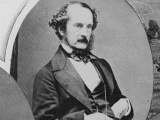
Dr Isaac Featherston, editor of the Wellington Independent, strongly attacked the New Zealand Company's land policy in his paper's 24 March 1847 issue. Colonel William Wakefield, the Company’s Principal Agent in New Zealand, interpreted this editorial as a thinly disguised accusation that he was a thief. In the resulting duel, Featherston fired first and missed. Wakefield then fired into the air, commenting that he ‘would not shoot a man who had seven daughters’. 

Featherston had arrived at Wellington in May 1841, having accepted a position as surgeon superintendent on board the New Zealand Company ship Olympus. He practiced medicine in Wellington and was heavily involved in local affairs. Later, in 1853, he was elected unopposed as the first superintendent of Wellington province.

After becoming the first editor of the Wellington Independent in 1845, Featherston used the paper to attack the New Zealand Company for deceiving migrants. He had himself been bitterly disappointed on arrival in Wellington: 'Did those mud hovels scattered along the beach, or those wooden huts which appeared every here and there … represent the City of Wellington?' Where, he asked, were the hundreds of acres of 'fine fertile land which shall produce such astounding crops'? His own investment was no more than ‘a useless swamp worth nothing'. William Wakefield, the Company’s main representative in Wellington, bore the brunt of his complaints.

John A. Lee expelled from Labour Party

1940 John A. Lee expelled from Labour Party

A charismatic ex-soldier, orator and writer, John A. Lee had been active in the New Zealand Labour Party since shortly after the First World War. Following Labour’s landslide victory in 1935, he fully expected to be in Cabinet. But Prime Minister M.J. Savage no longer liked or trusted Lee, with whom he had clashed on policy and tactics. Lee believed Savage was unnecessarily cautious; Savage thought Lee was too wild and unconventional.

In 1936 Lee was made a parliamentary under-secretary with responsibility for Labour's state housing scheme. By March 1939 some 3440 houses had been completed, with the success of the programme owing much to Lee's enthusiasm and organisational ability.

Lee remained dissatisfied with the government's caution on economic issues. He also opposed what he saw as a lack of democracy within caucus. He and his supporters successfully moved to have Cabinet elected by caucus, but Savage refused to accept this.

In 1938 Lee won the largest majority in New Zealand's history, but Savage appointed Tim Armstrong as minister in charge of housing. Lee responded by writing to all members of Labour's caucus spelling out his criticisms of finance minister Walter Nash and detailing disputes within caucus. Lee was censured at the party's 1939 conference, with little effect. He went one step too far - even for some of his supporters - when he wrote an essay that questioned Savage's mental capacity to govern. The Prime Minister was by now dying of cancer and the party quickly turned this into an issue of loyalty. Preparations were begun to have Lee expelled at the 1940 conference.

By the time of the conference in March, Savage had recovered sufficiently to pen an addition to his report. He accused Lee of having made his life 'a living hell' for the past two years. Although his supporters maintained that the real issue was party democracy, Lee was expelled by 546 votes to 344. Savage died two days later.