What happened that day?

Kiwi of the Week

  • barratt-boyes-biog.jpg

    Brian Barratt-Boyes

    At Green Lane Barratt-Boyes assembled a team that was at the forefront of heart surgery. He pioneered new surgical techniques involving the replacement of defective heart valves. In 1958 Barratt-Boyes performed New Zealand's first cardiopulmonary bypass using an imported Melrose Heart-Lung machine.

This WeeK's Quiz

Today in History

previous10 Marchnext

rss feed
New Zealand Cross created

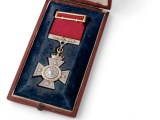
1869 New Zealand Cross created

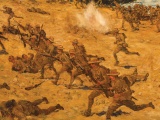
This medal was created because New Zealand's local military were not eligible for the Victoria Cross. Only 23 were awarded, all to men who served in the New Zealand wars, making it one of the rarest military honours in the world.

The New Zealand Cross was instituted by Governor Sir George Bowen by Order in Council. It met the need to find a decoration equivalent to the Victoria Cross, as colonial military personnel could only be considered for the VC if they were under the command of a British officer at the time of their exploit.

Bowen was officially rebuked by the Secretary of State for the Colonies for overstepping the limits of his authority. The Queen was officially ‘the fountain of all honour’, but five Crosses were awarded before Britain was even notified. In defending his actions, Bowen argued that the low morale of the local troops meant some tangible form of recognition for bravery in action was urgently needed. The Cross could also be awarded immediately without the inevitable delays of a referral to the British government for royal approval.

Despite the rebuke, Queen Victoria had little option but to ratify the Order in Council. Initially the new award was referred to as a ‘Decorative Distinction’. The title ‘New Zealand Cross’ was not adopted for some considerable time.

In 1999 a ‘new’ New Zealand Cross, similar in design to the original award, was instituted to replace the George Cross. Today this is the premier New Zealand award for ‘acts of great bravery in situations of extreme danger'. Unlike the original medal, it is intended primarily for civilians, but may also be awarded to military personnel in some circumstances.