
The British government's plans
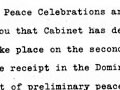
Having made its plans, the New Zealand government asked its British counterpart whether the peace celebrations should occur after the ‘preliminary’ or the ‘final’ peace. They failed to get an answer and, wanting to provide some certainty to the public, made their own decisions. In April 1919 Acting Prime Minister Sir James Allen announced Cabinet's decision that the celebrations would occur on the Sunday, Monday and Tuesday after the announcement that a preliminary peace agreement had been signed.
Questions in the House
New Zealand wasn’t the only country to have difficulty extracting information about the peace celebrations from the British government. Questions in the House of Commons in March, April and May 1919 revealed no more than that a Cabinet committee was considering the matter.
Despite its good intentions Cabinet’s decision proved unpopular. A number of local bodies expressed concern that this timeframe would not give them enough time to prepare. So in mid-May it was decided that the peace celebrations would take place on the second Sunday, Monday and Tuesday after the announcement.
By this time information from London suggested that the British intended holding peace celebrations in July. But it wasn't until mid-June that the British government officially notified New Zealand of its plans for four days of celebrations in August: a military pageant, a day of thanksgiving, a naval display, and a day of general rejoicing or for children. Initially Cabinet agreed to fall in with the British plans and on 23 June advised the public of this. But just two days later, perhaps having realised the similarities between the two proposals, it announced that it would revert to its original plan.
Then, on 28 June 1919, the Treaty of Versailles was signed, bringing an official end to the war between the Allies and Germany. The King proclaimed Sunday 6 July as a general day of thanksgiving. With his sanction, it was now decided that all celebrations should be held on 19 July. The New Zealand government was notified of these revised plans by coded telegram at the beginning of July. It was explained that the dates had been altered in order to have the day of thanksgiving as soon as possible after the actual signing of peace, and that general opinion supported bringing forward the other celebrations. Cabinet met on 3 July and again agreed to follow Britain’s lead.
Many of the communities which had planned three days of celebrations were unhappy with this decision. Christchurch’s Peace Celebrations Committee cabled the Minister of Internal Affairs:
At the Government's suggestion, the Committee has already arranged for three days’ celebrations, and expenditure has already been incurred, on the strength of the Government’s promised subsidy, in preparation for three days’ celebration.
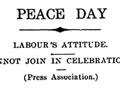
In response to these and similar protests, Cabinet agreed to extend the subsidy to Children’s Day (21 July). On 16 July the two days were officially gazetted as public holidays. After much confusion, the dates for the celebrations had finally been set.
The coal crisis
The delayed instructions from the British government hindered New Zealand’s efforts to plan peace celebrations. But the coal shortage had a much greater impact on the form they eventually took.
In December 1918 the government had decided to localise peace celebrations because the worsening coal shortage meant it would be difficult to transport large numbers of people to the main centres. On 8 July 1919 it announced that soldiers could travel free on the 19th and 21st and children on the 21st. But the lack of coal meant no special trains would be provided – and scheduled services had been reduced when a coal-saving railway timetable was introduced on 2 July. These cuts were significant and must have prevented some people attending even local celebrations.
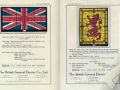
The other impact of the coal shortage was to reduce the scale of electric illuminations during the celebrations. The government’s initial plans were for both the soldiers’ day and the children’s day to end with illuminations. ‘Owing to the shortage of coal’, these should not be widespread but set up at suitable points in all cities and boroughs. Public buildings should be illuminated and streets ‘festooned with electric lights’.
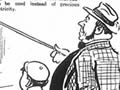
In early July, as the coal crisis deepened, Cabinet decided to tighten the criteria even further. On 8 July the Minister of Internal Affairs advised that ‘no peace illuminations involving the consumption of coal were to be allowed, and no subsidy would be paid by the Government in cases where such illuminations took place’. He went on to explain that this ‘prohibition covered the use of gas and electric light where current was produced by means of gas’ produced using coal. This announcement affected celebrations in communities such as Wellington and Auckland that relied on coal to power their steam or gas plants. Only communities such as Christchurch which used hydroelectric power could light up without restrictions.
Read more:
- Sir James Allen (Wikipedia)
- The Treaty of Versailles (Wikipedia)


