
Death of ‘Farmer Bill’ Massey

A gruff Ulsterman from South Auckland, William Ferguson Massey had been Prime Minister since 1912, leading the country through the bitter industrial strife of 1912–13, the First World War, the 1918 influenza pandemic and the 1921–22 slump. Campaigning on a platform of patriotism, stability, law and order, and the protection of private property, he led the Reform Party to (often very narrow) victories in the 1914, 1919 and 1922 elections.
After suffering from cancer for some years, Massey died in Wellington on 10 May 1925, aged 69. Sir Francis Dillon Bell served as stopgap PM for several weeks until Gordon Coates was appointed. Massey remains New Zealand’s second-longest-serving PM; his tenure was just three months less than that of Richard Seddon.
‘Coats off with Coates’ – the 1925 election
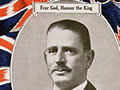
Gordon Coates became Prime Minister on 30 May 1925 and faced a general election six months later. A young leader for those days, the 47-year-old war veteran was a 'tall, lithe man’ with 'clear eyes, a tanned face, and a kindly mouth'. Labour’s John A. Lee labelled him the ‘jazz Premier’. His energetic management of the public works and railways portfolios had made him a popular figure, and as Native Minister (1921–28) he was more sympathetic to Māori concerns than most Pākehā.
The Reform Party’s advertising agent, Bert Davy, was able to turn Coates’ genial personality and pragmatic style into election-winning hype in the November election. He used the latest techniques from the commercial advertising industry to deliver an American-style presidential campaign. Instead of explaining detailed policies, Reform’s advertising employed bold imagery and simple slogans such as ‘Coates and Confidence’, ‘Coats off with Coates’, and ‘Safety, Stability, Progress’. New Zealand elections have never been the same since.
New Zealand and South Seas Exhibition
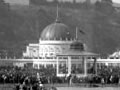
The New Zealand and South Seas Exhibition opened on 17 November on reclaimed land at Logan Park, Dunedin. Architect Edmund Anscombe had designed ‘a series of seven pavilions grouped on two sides by a Grand Court and converging by colonnaded passages towards a Festival Hall surmounted by a magnificent dome’. The buildings occupied approximately 16 acres 64,750 sq m (6½ ha). Visitors were able to tour almost the entire exhibition under cover. By the time it closed in May 1926 the exhibition had attracted over 3.2 million visitors, more than double New Zealand’s total population at the time. The closing Saturday drew a record attendance of 83,935.
Rewi’s last stand brought to the big screen
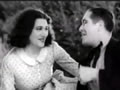
A ‘wild west’ drama-romance set during the New Zealand Wars, Rewi’s last stand centred on the epic but doomed defence of Ōrākau pā by Kingite forces led by Rewi Maniapoto. It was the second silent feature film written, directed and produced by Rudall Hayward, New Zealand’s most prolific pioneer film-maker. The story was researched from James Cowan’s history The New Zealand Wars, as was Hayward’s 1927 feature, The Te Kooti trail. He remade the film as a ‘talkie’ in 1940; it was released in Britain under the name The last stand.
Other events in 1925:
- A Committee of Inquiry into Mental Defectives and Sexual Offenders, which included Frederic Truby King, proposed (among other things) the compulsory segregation and sterilisation of ‘incurable’ mental defectives.
- The Radio Broadcasting Company, essentially New Zealand’s first national broadcaster, began operations. By 1927 it was running the YA stations in the four main centres.
- The Rātana Church was formally established.
- Tram passenger numbers reached a peacetime peak of 168 million trips. (This figure was only bettered during the Second World War, when petrol rationing prompted a temporary surge in tram patronage.)
- The railway linking Auckland with Whāngārei and Ōpua in the Bay of Islands was completed.
- Pioneer conservationist Pérrine Moncrieff published the field guide New Zealand birds and how to identify them.
- New Zealand formally took over the administration of Tokelau from Britain.
- The Women’s Division of the New Zealand Farmers’ Union (from 1946 Federated Farmers) was formed.
- Dozens of British merchant ships and hundreds of seamen were stranded in New Zealand ports for up to two months during the ‘Home Boat Strike’, an industrial dispute that circled the globe.
- A United States Navy fleet visited New Zealand for the first time since 1908, when the ‘Great White Fleet’ had toured the world.
- The prohibitionist cause again fell short of a majority in the national licensing referendum held alongside the November general election, polling 47.3%.


Community contributions