What happened that day?

Kiwi of the Week

  • freyberg.biog.jpg

    Bernard Freyberg

    A First World War hero and commander of the 2nd New Zealand Expeditionary Force, Bernard Freyberg was British-born but New Zealand-raised. He proved to be a charismatic and popular military leader who would later serve a term as Governor-General

This WeeK's Quiz

Today in History

previous5 Februarynext

rss feed
Opening of railway from Invercargill to Bluff

1867 Opening of railway from Invercargill to Bluff

The 27-kilometre line between Invercargill and the port at Bluff, built by the Southland Provincial Council, was the country's third public railway.

Like its predecessors – Canterbury's Ferrymead railway (1863) and Southland's Invercargill–Makarewa (1864) line – it opened amid much fanfare and optimism. Unfortunately, Southland’s first railway had been a costly flop: the Makarewa line was built using wooden rails, which became slippery in wet weather and were crushed by the tiny locomotives; in dry weather, sparks even set the tracks alight. A visiting journalist recalled how on one occasion, passengers were:

... politely requested by the guard to leave the carriage and help to push the carriage and engine to the summit of the bank. This we did with colonial cheerfulness, and on returning to our seats the guard promptly collected 2s. 6d. apiece from us as our fares!

The iron-railed Bluff line was more successful, but the Southland Provincial Council’s heavy expenditure on railways soon bankrupted the fledgling province. In 1870 Southland reverted to being part of Otago province. In 1875 the Bluff line (originally built to the British 'standard' 4 foot 8½ inch track gauge) was converted to the narrow 3 foot 6 inch gauge, which had by then been adopted as the standard for the New Zealand government's rail system.

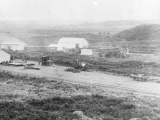
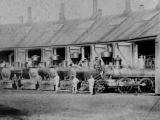
Image: Railway on Invercargill wharf in 1890s (Timeframes