What happened that day?

Kiwi of the Week

  • charles-heaphy-biog.jpg

    Charles Heaphy

    The multi-faceted Charles Heaphy made quite an impact on colonial New Zealand as an artist, explorer, soldier and colonial administrator. He was the first colonial soldier to win the Victoria Cross

This WeeK's Quiz

Today in History

previous18 Februarynext

rss feed
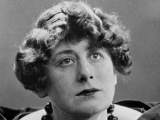
'Queen of Crime' Ngaio Marsh dies

1982 'Queen of Crime' Ngaio Marsh dies

Marsh, regarded as one of ‘Queens of Crime’ in the 1920s and 1930s, passed away just weeks after submitting her 32nd detective novel, Light Thickens, to publishers. She was also known for her work as an artist, playwright, actor and director.

Marsh had suffered a major heart attack in June 1980. After this she was largely confined to her house in Valley Road, Cashmere, Christchurch. Here she continued slowly revising her 1966 autobiography; it was republished in 1981. She also began what would be her final novel, Light Thickens, a detective story featuring British detective Roderick Alleyn and based around a production of Macbeth.

On 7 January 1982 she sent the novel off to her British and American agents, Pat Cork and Dorothy Olding. Both had reservations about the new novel, but on 3 February Olding cabled Marsh with the good news that it had been accepted by Boston publishers Little Brown and Company. Marsh was still anxiously awaiting news from British publishers Collins when she passed away from a brain hemorrhage on the 18th.

In the days that followed tributes flowed in: from Minister for the Arts Allan Highet, playwright Bruce Mason, James Bertram, then emeritus professor of English Literature at Victoria University, and Fiona Kidman, then President of Poets, Editors, Essayists and Novelists (PEN). While local tributes were full of praise for Marsh's work in the theatre, obituaries in British and American newspapers reflected her international reputation as a mystery novelist. In the Daily Telegraph David Holloway compared Marsh with her contemporary Dame Agatha Christie:

Unfairly perhaps, Dame Ngaio was always the slightly junior partner in the dual monarchy of Christie and Marsh. Certainly, Dame Agatha was the more ingenious maker of plots, but Dame Ngaio was always the better writer.

Marsh had made arrangements for her own funeral, asking Rev Simon Acland to conduct the service at Christchurch Cathedral. The service, which took place on 24 February, was broadcast on national radio. Despite this, and fog preventing out-of-town friends from attending, the Cathedral was packed. Later a small group of friends took her ashes to be buried in the graveyard of the Church of the Holy Innocents at Mt Peel, Canterbury.

Collins did accept Light Thickens and, following substantial revisions, it was published in September 1982 to ‘excellent reviews and record sales'.

Image: Ngaio Marsh (DNZB)

New Zealand's last hanging

1957 New Zealand's last hanging

Walter Bolton, a 68-year-old Wanganui farmer, was the last person to be executed in New Zealand. After a controversial trial, he was convicted of murdering his wife, Beatrice, and was hanged at Mount Eden prison. Bolton's execution raised the usual questions about the death penalty. Some people believed that capital punishment was legalised murder and that it was morally wrong to take another human's life in this way. Others opposed capital punishment on religious grounds or on the grounds that mistakes could be made.

Traces of arsenic had been found in small doses in Beatrice's tea. The quantity consumed over the best part of a year was enough to kill her. Water on the Bolton's farm was tested and found to contain arsenic, and traces of arsenic were also found in Walter and one of his daughters. The defence argued that sheep dip had inadvertently got into the farm's water supply.

The prosecution's case was strengthened by evidence that Bolton had admitted to having had an affair with his wife's sister, Florence. The idea that Beatrice's death was a result of accidental poisoning lost credibility. After deliberating for two hours and 10 minutes, the jury returned a guilty verdict. When the judge asked the defendant if there was any reason he shouldn't pronounce the death sentence, Bolton replied, 'I plead not guilty, sir.'

A newspaper story later claimed that Bolton's execution had gone horribly wrong. This highlighted another concern of opponents of the death penalty – that executions were cruel and inhumane. Rather than having his neck broken the instant the trap-door opened, Bolton allegedly suffocated slowly. The botched nature of his execution and lingering doubts over Bolton's guilt contributed to the debate surrounding capital punishment in New Zealand.

The death penalty for murder was abolished in New Zealand in 1961.

Image: Mount Eden Prison (Wikipedia )