What happened that day?

Kiwi of the Week

  • barratt-boyes-biog.jpg

    Brian Barratt-Boyes

    At Green Lane Barratt-Boyes assembled a team that was at the forefront of heart surgery. He pioneered new surgical techniques involving the replacement of defective heart valves. In 1958 Barratt-Boyes performed New Zealand's first cardiopulmonary bypass using an imported Melrose Heart-Lung machine.

This WeeK's Quiz

Today in History

previous13 Februarynext

rss feed
Killings at Pukearuhe

1869 Killings at Pukearuhe

The Pukearuhe redoubt was 50 km north-east of New Plymouth. Its military settlers protected the overland route north to Mokau and had also cleared bush for farms. This outpost was isolated and vulnerable, but as there had been no fighting in north Taranaki for some time there was little concern for the safety of its inhabitants. 

 On Saturday 13 February, a Ngati Maniapoto war party led by Wetere Te Rerenga shattered this illusion of safety when they attacked Pukearuhe. Two soldiers were killed on the beach nearby. At the redoubt itself Lieutenant Bamber Gascoigne was killed along with his wife and three children.

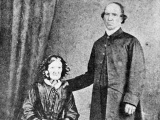
In the early evening the Wesleyan missionary John Whiteley approached Pukearuhe on horseback during one of his regular visits to outlying military settlements in Taranaki. He was seen by Te Rerenga’s war party, who shouted at him to go back. According to some accounts Whiteley refused, claiming that his place ‘was here for my children are doing evil’. A voice then called out, ‘Kahore e tangi nga tikaokao mate’ (Dead cocks do not crow). The first shot took out his horse. The coroner’s report later stated that Whiteley was shot five times and received several tomahawk blows to his eyes.

Fearing that the King Movement had taken up arms in support of Titokowaru, the colonial government put New Plymouth on a war footing. There were no further attacks and the scare soon passed.


Image: John Whiteley (DNZB)