What happened that day?

Kiwi of the Week

  • barratt-boyes-biog.jpg

    Brian Barratt-Boyes

    At Green Lane Barratt-Boyes assembled a team that was at the forefront of heart surgery. He pioneered new surgical techniques involving the replacement of defective heart valves. In 1958 Barratt-Boyes performed New Zealand's first cardiopulmonary bypass using an imported Melrose Heart-Lung machine.

This WeeK's Quiz

Today in History

previous14 Februarynext

rss feed
Maori soldiers sail to war

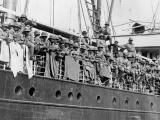
1915 Maori soldiers sail to war

Imperial policy initially opposed the idea of 'native peoples' fighting in a war among Europeans. There were fears that they might turn on their colonial masters or cause embarrassment by expecting equal treatment with European soldiers. When it was suggested that Maori be sent to garrison the newly captured German colony of Samoa, New Zealand Administrator Robert Logan cabled the government warning that this might provoke the Samoan population. Instead, the Native Contingent of about 500 men left Wellington for Egypt aboard the SS Wairrimoo on 14 February 1915.

Maori had mixed views about the First World War. Some supported the war effort and wanted to join up. Others opposed the war as they did not want to fight for the British Crown, which was seen to have done much harm to Maori communities in the 19th century. The varied reactions reflected iwi experiences of British actions in the previous century.

The official policy regarding the use of ‘native peoples’ changed as casualties mounted and the need for reinforcements grew. The Maori Contingent had a combat role at Gallipoli before being converted into a Pioneer Battalion to serve on the Western Front.

By the end of the war, 2227 Maori and 458 Pacific Islanders had served in the Maori Pioneer Battalion. Of these, 336 died on active service and 734 were wounded. Other Maori enlisted (and died) in other battalions as well.

Image: Native Contingent departure, 1915 

Te Kooti's last clash with government forces

1872 Te Kooti's last clash with government forces

Government forces led by Captain Preece tackled Te Kooti for the last time along the Mangaone stream, near Lake Waikaremoana. Te Kooti eventually withdrew to Te Rohe Potae (the King Country).

Image: Te Kooti Arikirangi Te Turuki (DNZB)