What happened that day?

Kiwi of the Week

  • wiremu-te-rangitake-biography.jpg

    Wiremu Kingi Te Rangitake

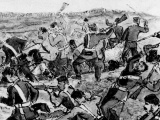
    Te Ati Awa leader Wiremu Kingi Te Rangitake's refusal to give up his land at Waitara led to the outbreak of the Taranaki War. In later life joined the pacifist community at Parihaka

This WeeK's Quiz

Today in History

previous19 Augustnext

rss feed
Kiwi pilot's sacrifice saves French village

1944 Kiwi pilot's sacrifice saves French village

As his damaged Hawker Typhoon fighter-bomber rapidly lost height, Pilot Officer James Stellin struggled to avoid crashing into Saint-Maclou-la-Brière, a village of 370 people in the Seine-Maritime region. He succeeded, but at the cost of his own life. The villagers gave him a hero’s funeral and have honoured his memory ever since.

James Kingston (‘Joe’) Stellin was one of several thousand New Zealanders who flew with the Royal Air Force over Europe in support of the D-Day landings in 1944. He was born in Wellington on 2 July 1922, the son of James and Beatrice Stellin of Lyall Bay. He attended Scots College before enlisting in the Royal New Zealand Air Force in 1942 and beginning pilot training. On 3 June 1944, three days before D-Day, he and two other Kiwi pilots were posted to 609 Squadron, RAF, then based at Thorney Island airfield, Hampshire. Over the following month, 609’s pilots flew numerous missions over Normandy, targeting German radar stations, tanks and transport. In early July the Squadron moved its base to France, arriving at Plumetot, north of Caen, under shellfire and in mud and rain. For the next six weeks Stellin flew almost daily missions against German tank concentrations, strongpoints and motor transport in the Falaise area.

On 18 August, 609 Squadron’s Typhoons destroyed at least seven German tanks and 12 vehicles. Stellin flew again that evening, attacking vehicles on the Vimoutiers to Orbec road and setting five alight. On the 19th, 609 again targeted German transport trying to escape the Falaise pocket. At 8.30 a.m. Stellin took off from Martragny airfield, flying Typhoon JP975. After destroying several tanks and trucks, the flight was heading home when Stellin asked permission to go down to attack a vehicle. He did not return to his formation and asked for a homing to find his way back to base. He was given a course but later reported that he was short of fuel. It is thought that his plane was hit by flak near Bernay. A teacher at Saint-Maclou-la-Brière, Monsieur Jacobs, described the scene:

It was 10 o’clock in the morning when the sounds of an aircraft in difficulties first made us look up. The plane was about 1500 to 2000 feet up, and rapidly losing height. Suddenly, on realising the great destruction his plane would cause if it were to crash in the centre of the village, the pilot straightened up his plane with a vigorous and supreme effort, made a half-climb, then turning sharp left at an acute angle, it fell rapidly, crashing less than a mile away.

Stellin tried to bail out at the last minute, but his parachute failed to open and he was killed. He was 22 years old. His funeral in Saint-Maclou-la-Brière was attended by 1200 people from the surrounding area. His grave in the local cemetery was later designated a Commonwealth War Grave; ever since 1944 it has been regularly decorated with flowers. In 1946 M. Jacobs, who had been active in the local Resistance, wrote a moving letter to Stellin’s parents. The following year the Kiwi pilot was posthumously awarded the Croix de Guerre avec Palme. The people of Saint-Maclou-la-Brière later engraved Stellin's name onto the war memorial for the dead of their own village. In 1964 they erected a black marble memorial stone to Stellin outside the gates of their church. In 2001 the area in front of the St Maclou church was named ‘Place Stellin’.

Stellin has also been commemorated in New Zealand. A memorial board was erected in the Kilbirne RSA and when that building closed it was moved to his old school, Scots College. The College library is named in Stellin’s honour and the school holds other memorabilia. When James’s father, a prominent Wellington businessman and developer (he was responsible for the subdivisions of Avalon, Kingston and Strathmore Park), died in 1964, he bequeathed funds to build the memorial in Saint-Maclou-la-Brière. He also gifted land on the eastern side of Tinakori Hill to the Wellington City Council to create the James Stellin Memorial Park. In August 2007 Wellington Mayor Kerry Prendergast and French Ambassador Michel Legras unveiled a long-promised plaque in the Memorial Park.

We are grateful to John Bickerton for supplying information on James Stellin.

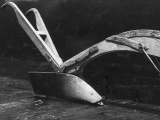
Image: Hawker Typhoon

Download the letter from Monsieur Jacobs about James Stellin (pdf)

Wakefield elected to Parliament

1853 Wakefield elected to Parliament

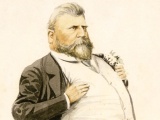
Edward Gibbon Wakefield, the mastermind behind the New Zealand Company's organised settlement of New Zealand, first stepped foot in the country on 2 February 1853. This was almost 15 years after his brother and his son took part in the Company's initial expedition. Wakefield settled in Wellington where, after a brief foray into politics, he would see out the remainder of his life in relative isolation.

Shortly after his arrival in Wellington, Wakefield began to campaign in the Hutt for a seat in both the House of Representatives and the Wellington Provincial Council. In his opening address to the Hutt electorate he claimed to have been misrepresented and set about correcting those misapprehensions in a mammoth seven-hour meeting. He won working-class support with talk of a scheme that would see labourers bought to New Zealand by the Company compensated for its failed promises by way of free land grants. Within a fortnight he was endorsed as a candidate for the forthcoming elections.

In his book on Edward Gibbon Wakefield's time in New Zealand, Peter Stuart remarked on Wakefield's ability to avoid being tarred with the blunders of the Company. Stuart noted that

where the Company had done good, he claimed credit for its operations; where it had caused suffering and hardship, he disassociated himself from it and headed the attack.

Wakefield was elected to both the House and the Provincial Council. The first session of the Provincial Council was held between October 1853 and February 1854. But Governor George Grey failed to call the General Assembly, for which Wakefield publicly criticised him. It was finally called by Grey's deputy, Lieutenant-Colonel Wynyard, to take place on 24 May 1854. At the first session Wakefield moved for the introduction of ministerial responsibility. His motion was passed with one member abstaining.

Following the third in a series of constituency meetings in the Hutt in December 1854, Wakefield came down with rheumatic fever. He resigned from both the House and the Provincial Council in 1855. He eventually recovered but seldom ventured out of his Kelburn house. He died on 16 May 1862, aged 66.

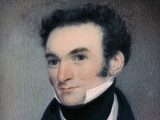
Image: Edward Gibbon Wakefield