What happened that day?

Kiwi of the Week

  • wiremu-te-rangitake-biography.jpg

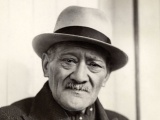
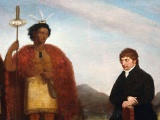
    Wiremu Kingi Te Rangitake

    Te Ati Awa leader Wiremu Kingi Te Rangitake's refusal to give up his land at Waitara led to the outbreak of the Taranaki War. In later life joined the pacifist community at Parihaka

This WeeK's Quiz

Today in History

previous9 Augustnext

rss feed
George Nepia plays last All Blacks test

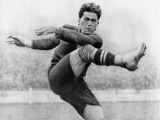
1930 George Nepia plays last All Blacks test

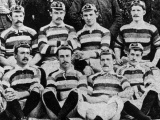
The 19-year-old fullback Nepia was one of the stars of the 1924-5 All Blacks, dubbed 'the Invincibles'. He played in all 32 matches on the team's tour of the British Isles, France and Canada. Still only 25, he appeared in his last test match in 1930, in the final game of the home series versus the British Lions. The All Blacks won the match 22-8 and the series 3-1.

His outstanding performances on the 1924-5 tour prompted one leading British journalist to write, 'it is not for me a question of whether Nepia was the best fullback in history. It is a question of which of the others is fit to loose the laces of his Cotton Oxford boots'. But after that four-test tour, Nepia only played a further five test matches for the All Blacks. One of the reasons was his non selection, on racial grounds, for the 1928 tour to South Africa. He was also restricted by a series of injuries and was unavailable for several tours.

Having suffered financial hardship during the Great Depression, in the mid-1930s Nepia decided to secure his family's future by accepting an offer to play rugby league in Britain. He returned to New Zealand in 1937 and appeared in the Kiwis's famous 16-15 win over Australia.

After the Second World War Nepia was reinstated to rugby. In 1947 he played two East Coast representative matches. In 1950, when well into his 40s, he played a festival match for the Olympians club.

Image: George Nepia (DNZB

US 'Great White Fleet' arrives in Auckland

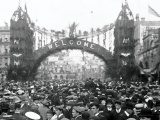
1908 US 'Great White Fleet' arrives in Auckland

The arrival of the 16 American battleships and their escorts, under the command of Admiral C. S. Sperry, was greeted with much pomp and ceremony. An extensive programme of 'fleet week' entertainment was put on for the 14,000 sailors.

The 'Great White Fleet' was a popular nickname for the US Navy battle fleet that circumnavigated the world between December 1907 and February 1909. Led by 16 battleships, the fleet was dispatched by president Theodore Roosevelt to demonstrate America's growing military might and blue-water naval capability.

The fleet covered 43,000 miles and visited 20 ports on six continents. After travelling south through the West Indies, along the east coast of South America and through the Straits of Magellan, the ships arrived in San Francisco in May 1908. Departing from California on 7 July, the Great White Fleet visited Hawaii, then reached Auckland on 9 August.

A feature of the six-day visit was a civic reception attended by most of the members of New Zealand's Parliament, who had travelled north from Wellington aboard the 'Parliament Special' – the first train to traverse the whole length of the still-unfinished main trunk railway.

After three stopovers in Australia, the Great White Fleet sailed for the Philippines, Japan and China, before returning to America's Atlantic coast via Ceylon, the Suez Canal and Gibraltar.