See historic events for any day of the year by entering the date below. Why not try your birthday?

The Battle of the River Plate in December 1939 was the Allies' first naval victory of the Second World War. The involvement of the cruiser HMS Achilles, which was largely manned by New Zealanders, was greeted with great jubilation back in New Zealand.
The German pocket battleship (heavy cruiser) Admiral Graf Spee had been commerce raiding in the Atlantic and Indian Oceans since the start of the war in September. On 13 December 1939 it was intercepted by three Royal Navy cruisers, Exeter, Ajax and Achilles, off South America's River Plate estuary. The Exeter was severely damaged and forced to retire. The Ajax and Achilles also suffered hits but managed to shadow the Graf Spee as it sought refuge in Montevideo, the capital of neutral Uruguay.
While his ship undertook repairs in Montevideo, the Graf Spee's captain, Hans Langsdorff, believed that the British were
assembling an overwhelming force to prevent any escape. Rather
than put his men at risk, he made the decision to destroy his own ship. On 17 December, after its crew was taken off, the Graf Spee was scuttled in the shallow estuary. Langsdorff committed suicide several days later.
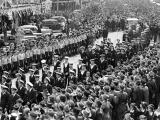
The Achilles and its crew were treated like heroes when they returned to New Zealand in February 1940, and parades in Auckland and Wellington (on 2 April) attracted huge crowds.
Image: return of the HMS Achilles

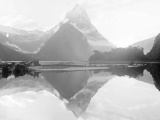
940,000 hectares of west Southland were permanently reserved for a national park. The 1952 National Parks Act formally created what has become New Zealand's largest national park and one of the largest in the world.