
Yankee boy hits town
Whether they were New Zealanders in Cairo or Americans in Wellington, soldiers had one thing in common. Having worked hard in camp or at the front, they wanted to play hard. Young, healthy, and unrestrained by the precepts of family and community, wondering if the next month might bring death, the soldier abroad turned instinctively to pleasures of the flesh.
Drink was often the first priority. In Auckland the Americans would make for the New Criterion Hotel in Albert St; in Wellington they would get off the train and head for the Midland in Lambton Quay or the St George in Willis St. There might be a nip of Scotch (which was rationed); then it was on to warm beer for an hour or so of the ‘swill’ before everyone was turned onto the streets at 6 p.m. Servicemen were forbidden by law from buying liquor to take off the premises, so the thirsty had to find illicit dives, purchase vinegary wine at exorbitant prices from sly-groggers, or fill lemonade bottles with ‘shell-shock’, a concoction which was one-third port and two-thirds stout.
Then it was time to seek female company. There was a range of places where this might be found. Each American camp soon had a commercial brothel close by that did brisk business. But most men genuinely wanted companionship and good fun, and to find out a little about the country to which they had come. So they turned to more respectable meeting places. The most respectable were the dances organised at the camps themselves or at the services clubs. Here there was no liquor, and only ‘nice girls’ were invited. The YMCA in Auckland organised Saturday night dances at its Downtown Club; women wore evening dresses and there were plenty of chaperones.
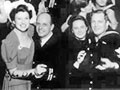
Those seeking a less restrained atmosphere went to a cabaret or a nightclub. In Wellington the Majestic Cabaret became famous. Here, Marines and their New Zealand partners would foxtrot or jitterbug or jive to the ‘Chattanooga Choo-choo’, played by an excellent swing band. Auckland’s El Rey nightclub served liquor and steaks and the band played Glenn Miller hits. With women in long dresses and the Americans in their handsome uniforms, it was all very glamorous. It was hardly surprising that at such places women agreed to more than the obligatory one dance that was expected of polite girls.
Kiwi girl falls in love
New Zealand women found the American visitors romantic. Picture the situation. Daily life in wartime was a sober, even grim, experience. Luxuries had disappeared from the shops; necessities such as sugar and butter were rationed; austerity clothing was introduced to save on material. Women found themselves ‘manpowered’ into unpleasant jobs, working long hours for no more than £2 (equivalent to $200 in 2023) a week. And, as the American authorities noted in a General Order placed in every camp which asked for good conduct, ‘you will find the country depleted of its young men’. Thousands were already overseas – some had been gone for more than two years – and more were leaving in regular shipments of reinforcements. Between October 1942 and March 1943, 20,000 men sailed away. Girls were left without boyfriends, wives without husbands.
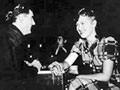
Suddenly, in strolled the Americans: all smiles, perfect teeth and looking like Clark Gable. Their uniforms were smart and well-tailored (at least by comparison with the New Zealanders’ ‘baggies’). They had money (about £5 – $500 – a week in pay, twice what New Zealand soldiers were paid and similar to the average wage for civilian New Zealanders, who also had to cover their living costs), and they were looking for fun. Their lucky date could expect taxi rides, meals out, exciting new drinks such as ice-cream sodas or cocktails with Manhattan names, evenings spent dancing wildly to bands or snuggling up at the movies, and a gift of nylons to clinch the deal. There might even be trips away to see the tourist sights. And next day there would be a thank-you bouquet of flowers or a box of chocolates. The Americans brought excitement and glamour.
They also brought good manners. New Zealand women were used to men who paid little attention to their needs. In pre-war New Zealand, society had been highly segregated by gender. Many men felt easier in the company of the boys from the rugby team or their mates in the bar. The visitors, however, had a charm which flattered. They doffed their hats, and were openly appreciative of good looks and concerned about a woman’s comfort. Their talk had an optimism and easy confidence that was attractive. How pleasant was that phrase which flowed from their lips, ‘Thank you, Ma’am’. It was not surprising that many Kiwi girls found themselves falling in love.
Not well received
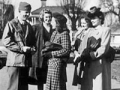
The American authorities did their best to prevent such developments. They did not want to cause resentments among an allied people; and they were aware that meetings in the heat of war did not always endure in the different world of civilian life. Couples intent on marriage would be interviewed by a chaplain and a company officer, and final approval had to be obtained from the battalion commander. One Marine recalls being told, only half in jest, that if he got married he would be court-martialled. Even so, about 1400 New Zealand women married American servicemen during these years.
The New Zealand authorities also became concerned about ‘Yankee boys running off with our women’. It was not good for morale when a soldier in Cairo or Cassino or Waiōuru found out that his fiancée was going out with ‘one of them’. In June 1943, the churches were asked to make an appeal to wives and sweethearts. A few New Zealand men dealt with the issue in malign ways. In Auckland in early 1944 a man beat his wife to death after she told him she wished to leave with an American.
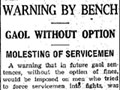
There were a number of skirmishes in the streets between New Zealanders and American servicemen. The most famous of these was the ‘Battle of Manners St’ on 3 April 1943. Partly because of the contemporary press censorship, this incident was wildly exaggerated by rumour. No one was in fact killed or seriously injured, but a series of running fights between American and New Zealand servicemen did take place in Wellington streets. This was not the only such incident. Also in the capital, there was a general fight at a boxing tourney in April 1943, and in June two civilians encouraged passers-by to ‘come and fight the Yanks’. Auckland also saw its share of conflict, with a drunken brawl in October 1942, bottle throwing and pistol shots in Shortland St five months later, and a stabbing in Queen St in May 1943.
Several factors were involved in these incidents: boozed men sent onto the streets when the pubs closed, soldiers on leave proud of their own traditions and looking for excitement, racial tensions between Māori and Americans from the South. But the growing resentment by New Zealand men of American success with ‘our women’ was clearly an important undercurrent. There were mutterings about ‘bedroom commandos’ and the contemporary British description appeared in New Zealand: ‘over-paid, over-sexed and over here’. With men in short supply, it was hardly surprising that sexual competition was the area in which the two cultures clashed most dangerously.

