What happened that day?

Kiwi of the Week

  • wiremu-te-rangitake-biography.jpg

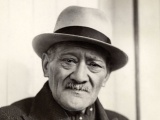
    Wiremu Kingi Te Rangitake

    Te Ati Awa leader Wiremu Kingi Te Rangitake's refusal to give up his land at Waitara led to the outbreak of the Taranaki War. In later life joined the pacifist community at Parihaka

This WeeK's Quiz

Today in History

previous6 Februarynext

rss feed
The Treaty of Waitangi is signed

1840 The Treaty of Waitangi is signed

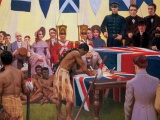
Around 40 Maori chiefs, led by Hone Heke, signed a Treaty with the British Crown at Waitangi in the Bay of Islands. The Treaty of Waitangi, as it has become known, had been prepared in just a few days.

Missionary Henry Williams and his son Edward translated the English draft into Maori overnight on 4 February. About 500 Maori debated the document for a day and a night before it was signed on 6 February. By September 1840, another 500 Maori had signed copies of the document that went around the country.

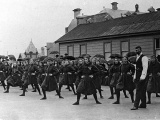
Image: reconstruction of the signing of the Treaty of Waitangi 

Liner <em>Wanganella</em> refloated after 18 days on Barrett Reef

1947 Liner Wanganella refloated after 18 days on Barrett Reef

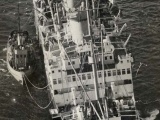
The trans-Tasman liner Wanganella, carrying 400 passengers from Sydney, had struck Barrett Reef at the entrance to Wellington Harbour at 11.30 p.m. on 19 January 1947. Unlike the Wahine disaster, which happened in the same place 21 years later, the incident occurred in calm seas and everyone on board was safely evacuated.

For 18 days the Wanganella stuck fast to the reef, despite various attempts to tow it off by tugboats. A spell of remarkably fine weather undoubtedly saved the ship from becoming a total wreck, leading to the local expression, 'it's a Wanganella day today'.  Finally, on 6 February, a southerly swell enabled the vessel to float clear. The Wanganella was towed into Wellington and entered the floating dock, but repairs and industrial action delayed its re-entry into service for almost two years.

The 9576-ton Huddart Parker liner, launched in 1929, sailed between Australia and New Zealand from 1933 to 1962, apart from a period of service as an Australian hospital ship during the Second World War.

From 1963 to 1970 the Wanganella was moored in Deep Cove, Doubtful Sound, and used as a hostel ship for nearly 300 workers building the Manapouri tailrace tunnel and power station. In this role, the vessel became notorious for its drinking culture. When it was finally towed away to be scrapped in 1970, it was said that the tugs struggled to dislodge the ship from a bed of beer cans that had been tossed overboard.

Image: the Wanganella on Barrett Reef. (Te Ara)