
Expressions of patriotism
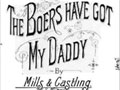
The outbreak of the South African War sparked off an outpouring of patriotic sentiments from New Zealanders. The war effort was supported in song, poetry and drama.
More than 20 patriotic songs and productions were copyrighted in the names of their authors or composers during the war. Many had a distinctly New Zealand flavour. ‘Boys of the Southern Cross’, copyrighted in 1900, had a rousing chorus line proclaiming: ‘We are the boys of the Southern Cross / Our stars shine on our flags / Emblazoned with the Union Jack / To show we’re Empire lads.’
Other melodies fuelled the sometimes jingoistic elements of New Zealand's expression of patriotism. ‘Sons of the Colonies’, copyrighted in 1900, warned extravagantly of ‘England in Danger!’ and urged sons of the colonies to hasten to the defence of the motherland.
The dramatic productions could be elaborate affairs. The relief of Ladysmith, written by G.H. Goodall, had a 60-strong cast of actors and musicians. Set in a military hospital in the besieged town of Ladysmith, the play was a tale of love, death, sacrifice and betrayal. Goodall and his cast toured Wairarapa in mid-1900. The performance in Greytown was preceded by considerable patriotic activity. The gun squad of St Matthew’s Church Lads Brigade and the three corps of the Wairarapa Cadets paraded through the town firing salutes. Before the production, the Greytown Band played a selection of military tunes, and the play ended with a ‘picturesque tableau’ of ‘Britannia and Her Defenders’.
Fundraising
New Zealand women played an important part in supporting the troops in South Africa.
Because government funding for the contingents was limited, public fundraising was necessary to ensure New Zealand troops were adequately supplied. Despite being restricted by their expected roles as Victorian wives, mothers and sisters, many women embraced fundraising efforts as a chance to express their support for the war. They promoted the war effort by selling buttons and ribbons, and organised fundraising events such as fêtes and galas.
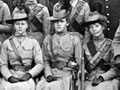
Although it only raised a small amount, the most memorable fête was held in the grounds of Government House in March 1900. Organised by Lady Douglas, the wife of the Under-Secretary for Defence, it drew more than 5000 visitors. Throughout the day women performed various entertainments, including a concert, a ballet and scenes from A Midsummer Night’s Dream. The Wellington Amazons entertained the crowd with a display of their parade-ground skills, drilling in military formation and performing tricks on decorated bicycles.
Inspired by Queen Victoria, who knitted scarves for presentation to brave troops, New Zealand women also produced clothing and other items such as food and toiletries.
Although the women were undoubtedly inspired by patriotism, many were also driven by a desire to help their sons, husbands and brothers who were serving. The notion of women as nurturing figures featured frequently in propaganda and was personified by Queen Victoria, who was viewed as the mother of the empire.
Opposition to the war
Though there was majority support for the war effort, some elements of society opposed the presence of New Zealand troops in South Africa. Among the first to voice their opposition were politicians like Robert McNab, the Liberal member for Mataura, a lawyer and historian who claimed that the Boers were ‘in the right, and … Britain to-day is in the wrong.’

Others, such as Thomas Taylor, a prohibitionist and politician, loudly condemned the war as a capitalist venture. Taylor fell foul of the general mood and lost his seat in Parliament. In a similar vein, James Grove of Wellington wrote to the New Zealand Times in December 1899 claiming that it was not the English people who were responsible for the war but a select group of greedy men wishing to profit from the bloodshed.
Pacifists were also vocal in their criticism. On 31 October 1899 Mrs Collings of Wellington wrote to the New Zealand Times: ‘as a woman who, with thousands of others, watched our brave lads leave our shores (many of them may-be never to return) I hope to see the day when war shall be no more.’
As the war dragged on and the death toll rose, many members of the public found their initial excitement and patriotism being replaced by war weariness. Some were concerned that the war was becoming a drain on resources, especially manpower, which were needed at home. Others felt that as a colony New Zealand should look after its own interests first.
Vocal opposition to the war carried risks, including the threat of being sacked. After writing anti-war pamphlets J. Grattan Grey was dismissed from his position as the chief Hansard reporter at Parliament. The Westport Harbour Board notified its staff that any expression of opposition to the war would be seen as disloyalty and result in dismissal.
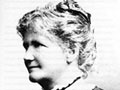
Women also played a prominent part in opposing the war. The New Zealand National Council of Women (NCW) was influenced by the International Council of Women, which firmly believed disputes should be resolved through mediation. One notable female opponent of the war was Wilhelmina Bain, a Christian feminist who won notoriety by criticising New Zealand's involvement in a speech to the 1900 NCW conference. The NCW passed a motion condemning militarism, but then distanced itself from Bain's views after she was widely denounced by newspapers.
Those who opposed the war did so for a variety of reasons and did not see themselves as disloyal to the British Empire. Indeed they believed their stance was essential if Britain was to preserve its honour. In general, opposition to the South African War had little effect and those who held such views soon understood that their expression would not be tolerated by the majority.


