
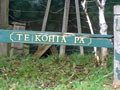
The opening shots of the Taranaki War were fired at Kīngi's new pā, Te Kohia – also known as the ‘L’ pa because of its shape – on 17 March 1860. After a day of fruitless artillery fire Māori evacuated the pā during the night with no loss of life. Te Kohia set the pattern for 12 months of fighting. Te Ātiawa aimed to confront the British in a way that prevented them from bringing their superior manpower and resources to bear.
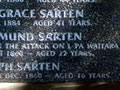
Raids against settler properties in outlying areas increased, forcing many to take refuge in New Plymouth. Fears that the conflict might spread beyond Te Ātiawa were realised when a force of 500 Taranaki, Ngāti Ruanui and Ngā Rauru Māori assembled above Ōmata, just south of New Plymouth. They built Kaipopo pā, which overlooked both the main road south and the settlers’ stockade at Ōmata. News reached New Plymouth on 28 March that five settlers, including two boys, had been killed at Ōmata, increasing fears that the town was being encircled by belligerent Māori. A force was dispatched immediately to rescue settlers said to be trapped behind enemy lines near the Waireka Stream.
Waireka
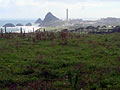
The Battle of Waireka was the first significant encounter of the Taranaki War. It was a confused affair during which William Odgers became the first man to earn a Victoria Cross in the New Zealand Wars.
A 'paper' victory?
Historian James Belich described Waireka as a ‘paper victory’ for the British. He maintained that Kaipopo pā was occupied by one elderly Māori man. The Waitangi Tribunal’s Taranaki report (1996) claimed that Waireka was a Māori victory. Archaeologist and historian Nigel Prickett acknowledged that British reports of ‘cart-loads’ of Māori bodies were exaggerated, but concluded that between 17 and 40 Māori had been killed. Regardless of the body count, the British could claim Waireka as a victory - albeit one of uncertain magnitude.
The rescue plan involved a force of around 120 troops and 100 local volunteers and militia. Lieutenant-Colonel G.F. Murray’s troops met no resistance as they advanced along the main road. However, the fighters in Kaipopo pā spotted the settlers as they marched along the beach. They moved out of the pā and took position near the Waireka Stream below. After an exchange of fire lasting several hours, ammunition on both sides was running low by late afternoon.
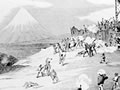
Murray had orders to have his men back in New Plymouth by nightfall as they formed a significant part of the town's defences. He had sent some of them to help the settler force but sounded the recall around 5.30 p.m. During the march back Murray and his men were met by Captain Peter Cracroft of HMS Niger, who was going to the aid of the settlers with 60 men. The withdrawal of Murray and his men was roundly condemned. How could professional soldiers abandon amateurs in their hour of need?
By the time the men of the Niger arrived below Kaipopo it was nearly dusk. Cracroft promised ‘Ten pounds to the man who gets that flag!’ Kaipopo pā was stormed and ‘captured under heavy fire’. Newspapers claimed that Cracroft’s men killed anywhere between 70 and 150 Māori. Odgers was now £10 richer and had gained his place in New Zealand military history. No attempt was made to contact either the marooned settlers or the militia under attack near the Waireka Stream before Cracroft and his men returned in triumph to New Plymouth. The Māori near the stream withdrew upon hearing the action at the pā above them, clearing the way for the settlers and the militia to reach the town.
Had the settlers really been in danger? Most had gathered at the property of the Reverend Henry Brown, who along with fellow clergyman Thomas Gilbert had been declared tapu. The Portuguese and French settlers with them were also at little risk, as the conflict ‘was only with the British’. Gilbert said later that ‘it was no wish of ours that an armed expedition should be sent on foot on our behalf. We were perfectly safe.’


