
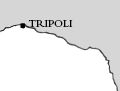
Following the breakthrough at El Alamein the New Zealand Division reached the Libyan border by 10 November 1942. It seized Halfaya Pass, taking 600 prisoners in the process, before being pulled out of the line. After recuperating near Bardia, it moved forward to the front at El Agheila in December. The New Zealanders made a series of attacks inland in an to attempt to cut off the Afrika Korps but Rommel’s forces managed to slip away on each occasion.
Tebaga Gap
By January 1943 Axis forces had fallen back into Tunisia, taking up defensive positions along the Mareth Line on the Tunisian-Libyan border. The New Zealand Division entered Tripoli on 23 January. As soon as engineers and naval forces cleared the devastated port, men from the division helped unload supply ships carrying food and equipment needed for the 8th Army’s advance.
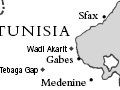
On 6 March New Zealand artillery help stop a German counter-attack at Medenine. This would be Rommel’s last action in North Africa – three days later he returned to Germany on sick leave, replaced by General Hans-Jurgen von Arnim. The 8th Army now prepared to attack the Mareth Line. Montgomery’s plan was for the recently formed New Zealand Corps, reinforced by British and French units, to push south to Tebaga Gap and encircle the German-Italian forces busy fighting the main Allied assault on the Mareth Line.
The New Zealanders reached Tebaga Gap on the night of 20 March. While they managed to capture several Italian positions a cautious Freyberg did not press home the assault immediately and the opportunity for a quick victory was lost. The stalemate was broken with a carefully planned and well-executed attack on 26 March. Operation Supercharge II began with a combined artillery barrage and low-level air attack. An infantry and armoured assault then shattered the enemy defences at Tebaga Gap. Despite the breakthrough, savage fighting continued to the south around Point 209, where the 28th (Maori) Battalion were positioned. It was here that 23-year-old 2nd Lieutenant Te Moananui-a-Kiwa Ngarimu won a posthumous Victoria Cross (VC) – the first by a Maori serving with the New Zealand forces.
Takrouna
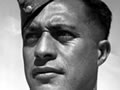
Despite the success at Tebaga Gap Axis forces managed to withdraw from the Mareth Line and slipped away to the north. Hemmed into a small area of northern Tunisia, they took up defensive positions in the rocky terrain around Enfidaville, some 100 km south of Tunis.
On 19-20 April 1943 the New Zealand Division set off to clear the foothills between Enfidaville and Takrouna. While the 6th (NZ) Brigade, on the right, achieved its objectives without too much difficulty, the 5th (NZ) Brigade suffered heavy casualties as it pushed forward in an area dominated by Takrouna, an outcrop of rock rising steeply from the plain at the end of a ridge. Troops from 28th (Maori) Battalion managed to scale the heights and seized the summit after fierce fighting. Determined counter-attacks forced the New Zealanders off Takrouna but it was retaken on 21 April by a small group led by Sergeant Haane Manahi. Men from other units also joined the assault, including Sergeant Walter Smith (23 Battalion), who used telephone cables to pull himself up to Takrouna's main ridge. One senior British commander described this action as ‘the most gallant feat of arms’ he saw during the war. Smith received a DCM for his part in the battle. Manahi was recommended for a VC but was instead awarded a DCM.
Victory in North Africa
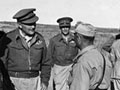
Takrouna was the New Zealand Division’s last major action in North Africa. On 13 May 1943 around 238,000 Germans and Italians laid down their arms. As temporary corps commander, Freyberg accepted the surrender of Marshal Giovanni Messe, commander of the 1st Italian Army, and Major General Kurt von Liebenstein, commander of the German 164th Light Afrika Division.
Hitler's belated decision to throw huge resources into holding Tunisia magnified the cost of defeat in North Africa for the Axis, even if those forces had extended the campaign by four or five months. Had Rommel been given these resources in July 1942 he might well have been victorious.
The New Zealanders did not have long to savour the victory in Tunisia. On 15 May the first units began their nearly 3000 km drive back to Egypt, reflecting on battles fought and comrades lost. The last of the New Zealand Division reached Cairo on 1 June, cramming into camps at Maadi and Helwan. For 6000 of the longest-serving men, there was the prospect of an early return to New Zealand: they learned that they would go home on a three-month furlough.


