What happened that day?

This WeeK's Quiz

Kiwi of the Week

  • savage-biog.jpg

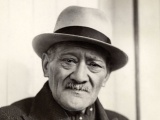
    Michael Joseph Savage

    Michael Joseph Savage (1872–1940) entered Parliament as a Labour member in 1919. When Labour came to power in 1935 he became Prime Minister and Minister of Native Affairs. He continued in these roles until his death in office in 1940.

Today in History

previous15 Julynext

rss feed
Lovelock smashes world mile record

1933 Lovelock smashes world mile record

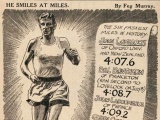
Jack Lovelock's run at Princeton University beat the old record for the mile, held by Jules Ladoumegue, by almost two seconds. It was dubbed the 'greatest mile of all time' by Time Magazine.

The race occurred during the sixth annual Oxford-Cambridge v Princeton-Cornell track meet. There was considerable media interest in the mile match-up between Lovelock (Oxford) and Bill Bonthron (Princeton), with speculation that a new world record might be set. Bonthron had impressed while winning that year's intercollegiate 800-m and 1500-m events. Prior to the Princeton-Cornell meet, Lovelock and team-mate Forbes Horan (Cambridge) competed against the Yale-Harvard team in the mile. Lovelock won in a time of 4:12.6, an intercollegiate record.

On the day of the event there were up to 6000 spectators at Palmer Stadium, Princeton. Rain threatened but held off and by the start of the day's programme at 4.30 p.m. the conditions were good for running. It was a tactical race. Bonthron took the initial lead, with John Hazen (Cornell) taking over near the end of the back straight. To Lovelock's delight, they were setting the pace just as fast as he had wanted Horan to. Just before the 880-m mark Bonthron, thinking the pace wasn't fast enough, shot forward. As they came to the top corner Horan overtook Bonthron - keen that he and Lovelock reach the three-quarters mark in the time they had set themselves. Horan was unable to keep up and as they reached the final quarter the race was left to Bonthron and Lovelock.

With just under 300 m to go, Bonthron pulled away with the ‘blistering kick' he was known for. Lovelock was prepared and shortened and quickened his stride, closing the gap before the final bend. As they came into the home straight he drew level and then passed Bonthron. He crossed the tape leading by seven strides.

Lovelock's time of 4:07.6 broke the world record by 1.4 seconds. It was the first time a New Zealander had achieved a recognised world record. As the top miler in the world Lovelock was inundated with invitations to social engagements and races in Europe and the United States. In 1933, both before and after the mile record, Lovelock ran 33 major races and won most of them. That year he was voted second in the Sportsman of the Year poll in the US.

Image: Detail from newspaper cutting Jack Lovelock breaking the mile record.