
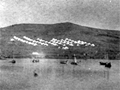
After the carnage on Chunuk Bair and Hill 60, the surviving New Zealanders, along with three exhausted Australian brigades, were sent to Lemnos in mid-September 1915 to recover and rebuild their strength. At full strength they would have numbered 18,000; just 4000 survivors stumbled into the ‘rest camps’. The disorganisation that had marred the Gallipoli campaign followed the men even here – on arriving at ‘Sarpi Camp’, the sick and weary veterans found they had to build it themselves.
Exit strategy
Hill 60 was the last major Allied attack at Gallipoli. The failure of the August offensive raised more questions about the future of the campaign, especially in light of the demands on the Western Front and at Salonika. For the British authorities, Gallipoli had become an embarrassing backwater. Herbert Asquith’s government turned down Lieutenant-General Hamilton’s request for more men, and then in mid-October replaced him with Lieutenant-General Sir Charles C. Monro.
To exacerbate problems, the Central Powers’ occupation of Serbia had created a direct rail link between the Ottoman, Austro-Hungarian and German empires. The Ottomans could now receive heavy artillery from Germany and Austria. The strength of the Ottoman Fifth Army was also increasing; its 315,000 soldiers now opposed the MEF’s 134,000. It did not take Monro long to recommend evacuation.
Evacuation
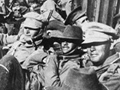
The New Zealand brigades returned to Anzac on 8-9 November. While they had received some fresh reinforcements from Egypt, every unit was below strength and the men’s health remained poor. The onset of winter did not help their frail bodies. Frostbite and hypothermia became rife as cold rain, icy wind and snow lashed the peninsula. A huge storm at the end of November flooded trenches and caused many deaths among the exposed troops.
The deteriorating conditions, and the Ottomans’ growing strength, finally convinced the British to order the evacuation of Suvla and Anzac on 22 November. Planning moved quickly and, in contrast to the shambolic landings of April, efficiently. To maintain security, troops were told their units were heading to Lemnos for a rest, although rumours of evacuation were rife as stores disappeared and supplies were not replaced.
Now & again batches of troops were taken away, till at last roughly 45,000 troops were left to hold the lines. Fine weather & secrecy were required for our success. How secrecy was kept was a mystery to us all, as the fact was known for some time previous, & yet as events transpired, it is almost certain the enemy never had an inkling of what our next move was going to be. …
On Saturday December 18th, half of those left were to be taken off, the remainder to hold the line until the next night. So anything of any use – ammunition etc – was buried or destroyed, except what would be required. Then Saturday came & the first lot were taken off successfully. Among those left for the last night were the machine Gunners, & all their equipment had to be taken away – so rifles – worked automatically with water dripping into a tin, & made fast to the trigger, & which were placed at intervals in the trenches, these would fire every now and then.James McWhirter, Auckland Battalion, in Gavin McLean, Ian McGibbon and Kynan Gentry (eds), The Penguin book of New Zealanders at war, Penguin, North Shore, 2009, pp. 158–9
CMR return to Gallipoli
In December 1918, the Canterbury Mounted Rifles Regiment returned to Gallipoli temporarily as part of an Allied garrison force. They helped monitor Ottoman compliance with the armistice and searched the Anzac battlefields for the graves and remains of missing comrades. The influenza pandemic and wintry conditions on the peninsula took a toll on the men’s health; more than 100 fell ill and 11 died before the unit returned to Egypt in late January 1919.
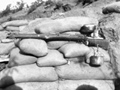
The evacuation of Anzac began on 15 December, and 36,000 troops were shipped out over four nights. Support troops and reserves went first, then the fighting units were thinned out until only 10,000 remained on 19 December. They moved out that night in a coordinated withdrawal from the front-line trenches. At 4.10 a.m. on the 20th, the last men left Anzac Cove. Suvla was evacuated the same night, but British and French forces remained at Helles until 8-9 January 1916. Then the campaign was over.
Gallipoli’s legacy
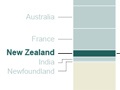
Gallipoli was a costly failure for the Allies, with 27,000 French and nearly 115,000 British and dominion casualties. New Zealand suffered around 8000 casualties, including 2779 dead. Australia’s 28,000 casualties included more than 8700 fatalities. The Ottomans paid a heavy price for their victory: an estimated 250,000 men were killed or wounded defending Gallipoli. For the survivors, their families and communities, the effects of the campaign would last for many years.
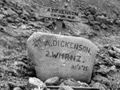
Strategic factors determined the outcome of the campaign. Essentially, the Allies did not have enough men available at the crucial moments. Hamilton launched the campaign with five divisions against a roughly comparable Ottoman force operating on familiar territory. This rough parity continued throughout the campaign, with 13 Allied divisions eventually facing 14 Ottoman divisions. The British government’s lukewarm commitment to Gallipoli before July 1915 ensured that the Allied build-up was always too little, too late. Poor leadership also played a part in the Allied failure, with many men sacrificed in futile attacks at Anzac and Helles.
The Gallipoli campaign had little impact on the outcome of the First World War. The decisive theatre was the Western Front, where the Anzacs headed next. It was far from clear that the Ottomans would have capitulated even if Allied naval forces had threatened Constantinople. And now, given the sorry state of the Balkan armies, the chances of a Balkan coalition attacking the Allies were slim.
NZ's last Gallipoli veteran
New Zealand's last Gallipoli veteran, Alfred Douglas (Doug) Dibley, died on 18 December 1997, aged 101. A stretcher bearer with the New Zealand Medical Corps, he served at Anzac in November–December 1915.
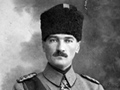
Gallipoli has become a place of special significance to Türkiye, Australia and New Zealand alike. For many Turks, it marks the beginning of a process of national revival in which Mustafa Kemal (later Kemal Atatürk), the Ottoman hero of Gallipoli, would become the founding president of the Republic of Türkiye.
In Australia and New Zealand, the campaign helped foster a growing sense of national identity. Those at home were proud of how their ‘boys’ had performed under difficult conditions. Official observance of Anzac Day, the day of the landing, ensured the campaign would not be forgotton. Today, Gallipoli remains in the collective consciousness of both countries. Thousands of New Zealanders and Australians each year make the pilgrimage to Türkiye to visit the battlefields where their ancestors fought and died. For many, being at Anzac Cove on 25 April is almost a rite of passage.
See also: 'The evacuation of Gallipoli in the soldiers' own words' ( WW100)


