
No Maoris no Tour
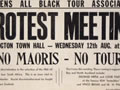
In May 1960 the All Blacks left for a tour of South Africa. They had finally won a series against the Springboks for the first time in 1956 and this was a much anticipated re-match between the two powerhouses of world rugby. However, the 1960 tour is best remembered for the fact that no Maori players were selected because of South Africa's segregationist apartheid laws. The selection of a racially based New Zealand team resulted in one of the biggest public protests this country has seen.
Arrival of Television
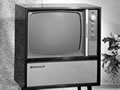
Broadcast from Shortland Street in central Auckland, New Zealand's first official television transmission began at 7.30 p.m. on 1 June. The first night's programming lasted just three hours and was only received in Auckland. The first broadcast included an episode of The Adventures of Robin Hood, a live interview with a visiting British ballerina and a performance by the Howard Morrison Quartet.
Double gold in Rome
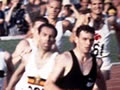
On 2 September New Zealand enjoyed one of its greatest days at the Olympic Games when Peter Snell won gold in the 800 metres followed shortly after by Murray Halberg in the 5000 m to complete a remarkable track double in Rome's Olympic Stadium. Barry Magee's bronze medal in the men's marathon completed a unique trifecta for the legendary coach Arthur Lydiard.
The Holyoake years begin
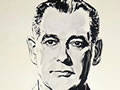
Labour went into November's general election still suffering a backlash in response to its infamous ‘Black Budget' of June 1958. The second Labour government had alienated itself from many of its traditional supporters with this response to a worsening balance of payments crisis. The increase in taxes on beer and smokes - the workers' pleasures - was skilfully manipulated by National's leader Keith Holyoake. National won the election with a 12-seat majority. Holyoake was sworn in as Prime Minister with Jack Marshall becoming Deputy Prime Minister.
Other 1960 events
- In February Mrs Helen Garrett of Christchurch became the first woman to serve on a jury in a criminal case. The Women Jurors Act (1942) had provided for women between the ages of 25 and 60 to have their names placed on the jury list on the same basis as men - if they so desired.
- Barry Crump's novel A good keen man was published.
- Following a magnitude 9.5 earthquake off the coast of Chile (the most powerful earthquake of the 20th century) the first of many tsunami waves began arriving at New Zealand's east coast in the late evening and early morning of 23 and 24 May.
- In September a 'riot' by young people at the Hastings Blossom Festival saw the issue of ‘degeneracy and licentiousness among the nation's youth' become an issue in November's general election.
- The Aranui, TEAL's last flying boat, landed in Mechanics Bay, Auckland, for the final time on 14 September. The Coral Route - Auckland to Fiji, Samoa, the Cook Islands and Tahiti - was the last scheduled flying boat service in the world.
- The USS Halibut (complete with its state-of-the art Regulus missiles) became the first nuclear-powered submarine to visit New Zealand.
Can you remember 1960? Add your memories and comments in the form below.


Community contributions