
First national Waitangi Day celebration
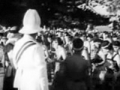
In its 1957 election manifesto the Labour Party declared its intention to make Waitangi Day (6 February) a public holiday. Once in power, though, Labour announced that the country couldn't afford another public holiday. Instead the Waitangi Day Act 1960 declared that the day would be celebrated as ‘a national day of thanksgiving’. Localities could choose to make it a public holiday if they wished but they would have to give up an existing holiday in return.
Baby-boom peaks
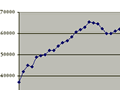
1961 was the most fertile year of the post-war baby boom. Over 65,000 babies were born - 5338 in October alone. More women were having children and on average they were having more children - roughly four per woman (in 2009 the rate was a little over two). Fertility rates soon began to fall and the boom was officially over in 1964. The availability of the new contraceptive pill played its part in slowing the birth rate, as did the deterioration in the New Zealand economy from 1968.
End of capital punishment
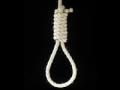
The first Labour government abolished the death penalty for murder in 1941. National restored it in 1950 and between 1951 and 1957 eight men were executed for murder. Labour made the death penalty inoperative when it returned to office in late 1957. The National Party returned to power in 1960, but this time there was dissent within National on the matter. In 1961 Parliament held a free vote (whereby members were not required to vote according to party policy) on an amendment to the Crimes Act abolishing the death penalty. With the support of ten government members – including future Prime Minister Robert Muldoon – the amendment was carried 41 to 30.
The first Golden Kiwi draw
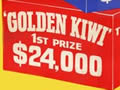
Interest was high for the First Golden Kiwi draw in December 1961. All 250,000 tickets had been sold by the following afternoon. Mr C.V. O'Connor won the first prize of £12,000. His winnings could theoretically have bought ‘a three bedroom house in a middle class Wellington suburb, a new six-cylinder car, and some spending money to boot'.
Other 1961 events
- The first Golden Shears competition, which was to become an icon of the shearing and wool-handling industry in this country, was held at the Masterton War Memorial Stadium. Ivan Bowen, brother of the legendary Godfrey Bowen, beat nearly 300 shearers from New Zealand and Australia to win the title.
- The New Zealand government took full control of Tasman Empire Airways Limited (TEAL) when it acquired the Australian government's 50 percent share in the airline. TEAL became Air New Zealand in 1965.
- Western Samoa voted overwhelmingly for independence from New Zealand. The League of Nations had formally allocated New Zealand a mandate to rule the former German colony in December 1920 following Germany's defeat in the First World War. Independence was achieved on 1 January 1962.
- On 13 December 1961 diners at The Gourmet in Shortland St, Auckland, became the first New Zealanders to be legally served wine with their meal. Restaurateur Otto Groen had spent seven years fighting the council to become the first New Zealand restaurant to be granted a liquor licence.
Can you remember 1961? Add your memories and comments in the form below.


Community contributions