
Bus tragedy kills 15
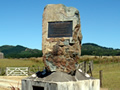
On Thursday 7 February a bus carrying 35 passengers lost control on a bend as it descended Pilbrow Hill in the Brynderwyn Hills, near Whangarei. The brakes failed and despite the best efforts of the driver, Harold Parker, the bus tumbled down a near-vertical 30-metre slope to the bank of the Piroa Stream below. Fifteen people died in what remains New Zealand's worst bus accident. The party was returning from Waitangi Day celebrations which Queen Elizabeth and Prince Philip had also attended.
Bob Charles wins British Open
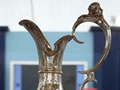
Carterton-born golfer Bob Charles became the first New Zealander, and the first left-hander, to win one of golf’s four majors when he won the British Open, the oldest of the four major championships in professional golf. He defeated American Phil Rodgers in a 36-hole playoff at Royal Lytham and St. Annes. Thirty years later he won the Senior British Open, one of more than 70 titles he won in a career spanning 50 years. It would be 40 years before another left-hander would win a major. In 2005 Michael Campbell joined him as the only other Kiwi to win a major.
Notorious murders hit the headlines
During the 2000s there were around 50 murders a year in New Zealand. The 1960s saw only 30 convictions for murder in the entire decade. It is easy to see why such crimes were big news stories. 1963 got off to a particularly violent beginning when four police officers were killed within a month of each other in two separate incidents. In January Detective Inspector Wallace Chalmers and Detective Sergeant Neville Power were shot dead by Victor Wasmuth while attending a shooting in the Waitakere Ranges. The following month Constables James Richardson and Brian Schultz were both shot dead while sitting in their police car after responding to a domestic dispute in Lower Hutt.
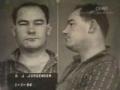
As a result of these killings, in 1964 the police force began training officers for a specialist armed offenders squad. Between 1890 and 2009, 29 police officers lost their lives in the line of duty.
The year came to a violent conclusion with the Bassett Road Machine-gun murders resembling something from the gangland days of Chicago.
New Zealand enters the jet age
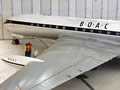
The British Overseas Airways Corporation (BOAC) began a twice-weekly jet service between London and New Zealand. The de Havilland Comet 4 aircraft had a flying time of 37 hours and could carry between 74 and 81 passengers. The arrival of the jet age helped reduce New Zealand’s sense of isolation. By 1966 there were direct flights from California, while jets began flying the domestic main trunk route in 1968. These bigger and faster planes saw Kiwis take to the air in much greater numbers. Passenger numbers increased from around 500,000 in 1959 to 1.3 million a decade later.
Other 1963 events
- Massey Agricultural College and the Palmerston North branch of Victoria University of Wellington combined to establish Massey University College of Manawatu; on 1 January 1964 this would become the fully autonomous Massey University of Manawatu.
- Queen Elizabeth and Prince Philip returned for the first time since the hugely popular Coronation tour of 1953-54.
- In what remains New Zealand's worst internal civil aviation accident, all 23 passengers and crew were killed when an NAC DC-3 crashed in the Kaimai Range near Tauranga in July 1963.
- Aunt Daisy (Maud Basham) - the ‘first lady of radio’ - died in July
- In October ‘Lynnmall’, our first American-style shopping mall, opened in west Auckland.
- The All Blacks departed for a tour of the British Isles, France and Canada. They played 36 matches during the four-month tour, losing only once, to the Welsh club side Newport, and drawing with Scotland.
Can you remember 1963? Add your memories and comments in the form below.


Community contributions