
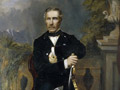
In late 1861, George Grey returned from Cape Town for a second term as governor of New Zealand. He replaced the unpopular and ultimately unsuccessful Thomas Gore Browne, who had been roundly condemned by settlers for his mismanagement of the Taranaki War. Gore Browne was keenly aware of the need to respond to the King Movement and its involvement in the fighting in Taranaki. He had demanded that the Kīngitanga submit ‘without reserve’ to the British Queen and began planning an invasion of Waikato shortly before he was reassigned to Tasmania.
His superiors at the Colonial Office saw Grey as a safe pair of hands. He had both ended the Northern War and tamed the Ngāti Toa leader Te Rauparaha during his first term (1845–53). But while speaking of peace and using flattery and patronage, Grey began preparing for war. A rūnanga (council) system offered as a limited form of Māori self-government gained little support. In another attempt to undermine the authority of the Kīngitanga, Grey appointed John Gorst as resident magistrate and civil commissioner for Waikato.
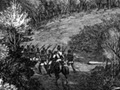
Central to any plans to invade Waikato was a reliable transport route for men and supplies. The Waikato River, the region’s ‘highway’, was dominated by Māori traffic. Overland access to it from Auckland was severely restricted by densely wooded hills. The outlying settlements of Papakura and Drury could be reached only by ‘roads’ that were little more than dry-weather dirt tracks. Building an all-weather road from Auckland to the Waikato River was a key part of the preparations for war.
The Great South Road
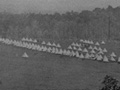
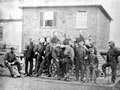
From January 1862 Lieutenant-General Duncan Cameron, the new commander of the Imperial forces in New Zealand, deployed every available soldier to clear bush and fell trees for the construction of the Great South Road. Each regiment was responsible for a section of the road and bonuses were offered for every cubic yard of scoria (hard volcanic rock) moved. On average 1700 men worked on the road each day.
Redoubts were built at critical points along the road. Queen’s Redoubt, capable of housing 450 men, was established at Pōkeno, near the Mangatāwhiri Stream, the northern boundary of the territory under the mana of the Māori King. A stockade was built above the Waikato River at nearby Havelock’s Bluff (Te Ia). The approaches to the river were mapped and surveyed, and it was reconnoitred from Waikato Heads to Tūākau. By July 1863 Auckland was connected to Queen’s Redoubt by electric telegraph. More troops arrived from England and the local militia was mobilised. The preparations for an invasion were nearly complete.
An excuse to fight
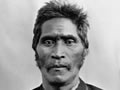
Speaking at Taupiri in Waikato in January 1863, George Grey announced his intention to ‘dig around’ the Kīngitanga until it fell. Leading chief Wiremu Tāmihana wrote to him, asserting that Māori had the same right as the nations of Europe to choose a sovereign from among their own people. This was interpreted as a rejection of British sovereignty.
Was Auckland really at risk?
When fighting recommenced in Taranaki, settlers south of Auckland armed themselves, barricaded their homes and stockaded their churches. But Auckland was important to the Waikato economy and Waikato Māori would have been reluctant to lose this market. Historian James Belich suggests that economic envy was another Pākehā motivation for war. If they could gain control of Waikato resources their dependence on Māori would be reduced.
In the autumn of 1863 Grey provoked a resumption of hostilities in Taranaki by ordering the military reoccupation of the Tātaraimaka Block south-west of New Plymouth. On 4 May an ambush at nearby Ōakura resulted in the deaths of nine British soldiers.
Grey blamed the Kīngitanga, which he alleged was also planning a ‘bloodthirsty’ assault on Auckland. Claims that there was ‘little doubt [that the Waikato] are at the bottom of most of the mischief’ were used to convince his superiors in London that an attack on Auckland was imminent. By the time it was clear that there would be no such attack, another 3000 troops had been sent to New Zealand.
By early June matters in Taranaki had been taken care of and the troops there were sent back to Auckland. On 9 July Grey upped the ante, demanding that all Māori living between Auckland and the Waikato aukati give up their weapons and take an oath of allegiance to the British Crown. Those who refused to do so would be evicted from their lands. Many young Māori men went bush, while others fled south into Waikato.
An ultimatum
Cameron now moved his headquarters to Queen’s Redoubt. 1500 troops were moved up to Drury and Pōkeno, and preparations were made to transport men across the Mangatāwhiri. Then Grey issued an ultimatum dated 11 July 1863. Waikato Māori were accused of driving away ‘Europeans living quietly on their own lands’ and plundering their property. Furthermore, they had instigated the murder of officers and soldiers during the recent fighting in Taranaki. Those responsible for ‘crimes committed in other parts of the Island’ had been ‘rescued or sheltered’. The final straw was ‘assembling in armed bands’ in order ‘to come down the river to ravage the Settlement of Auckland and to murder peaceable settlers’.
Grey made it clear that ‘Those who wage war against Her Majesty, or remain in arms, threatening the lives of Her peaceable subjects, must take the consequences’. By acting against the Crown, they would forfeit the ‘right to the possession of their lands guaranteed to them by the Treaty of Waitangi’.
For the historian Chris Pugsley, Grey’s ultimatum was ‘as cynical and dishonest as everything else he had done leading up to this war’. The following day — before it had even reached its supposed audience — Cameron began his invasion.


