

The explorers Abel Tasman, James Cook and Marion du Fresne all met with violence in New Zealand. This convinced many Europeans that New Zealand was a dangerous place. From the 1790s, though, sealing and whaling gangs forged pragmatic commercial interactions with Māori.
On several occasions visiting Europeans were attacked by Māori. These were not random acts of violence. In 1808 the crew of the Parramatta were killed after the vessel was wrecked near Cape Brett, Northland. They had earlier wounded three Māori and tried to sail away without paying for goods they had acquired.
When events like this occurred, Māori perspectives on them were rarely explored. After a crew of convicts took over the Venus and marauded along the Northland coast in 1806–7, there was little comment about their depredations against local Māori. European motives for violence were somehow transparent; Māori were considered duplicitous and unpredictable.
The 1809 ‘Boyd Massacre’ was a case in point. Traditional European histories viewed this as a heinous act of murder and an example of Māori barbarism. Little, if any, mention was made of the Māori casualties from European reprisals or the civil war that followed.
The historian James Belich argued that such incidents should be kept in perspective. Most Māori were willing participants in trade and realised that harming Europeans would be counterproductive. For Belich, instances of conflict were ‘exaggerated and misinterpreted’. Attacks on property were more common and contributed to a sense of lawlessness, but the level of Māori–European violence was small compared to the amount of contact. When the ruthless armies of the Musket Wars ranged the land, very little European property was plundered and almost no Pākehā were killed. For Belich, the question was not why there was so much interracial violence but why there was so little.
Bibles, industry and trade
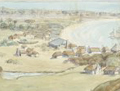
Many Māori welcomed the new experiences offered by contact with Europeans. The missionaries who arrived from 1814 brought with them ideas and concepts from the wider world. They enabled Māori to become literate in their own language by translating parts of the Bible. Māori visited New South Wales and Britain, enlarging their experience of commerce, the role of monarchy, systems of law and government, and the treatment of indigenous peoples.
Most Europeans who arrived on these shores in the early 19th century came to exploit the country’s natural resources: seals and whales, then timber and flax. The arrival of British and American sperm whalers from the early 1820s saw Kororāreka (now Russell) in the Bay of Islands become an important port. Local Ngāpuhi made the most of new opportunities that included the acquisition of muskets.
New firepower - the Musket Wars
Muskets (ngutu parera) quickly became much sought-after trade items. While the first muskets peddled by European traders were unreliable and slow to reload, the weapon ultimately changed the face of intertribal warfare. Tens of thousands were killed in the Musket Wars of the 1810s, 1820s and 1830s, and tribal boundaries were drastically altered. From 1818 northern Māori war parties armed with muskets attacked tribes further south. As iwi competed to obtain muskets an arms race developed.
These wars were often cited as the most negative consequence of contact and the reason why Māori needed protection. However, in recent decades historians have argued that the musket wars were about tikanga (custom) and often involved the settling of old scores. They would have occurred regardless of contact; the musket was merely a new and more deadly weapon with which to fight them.


